


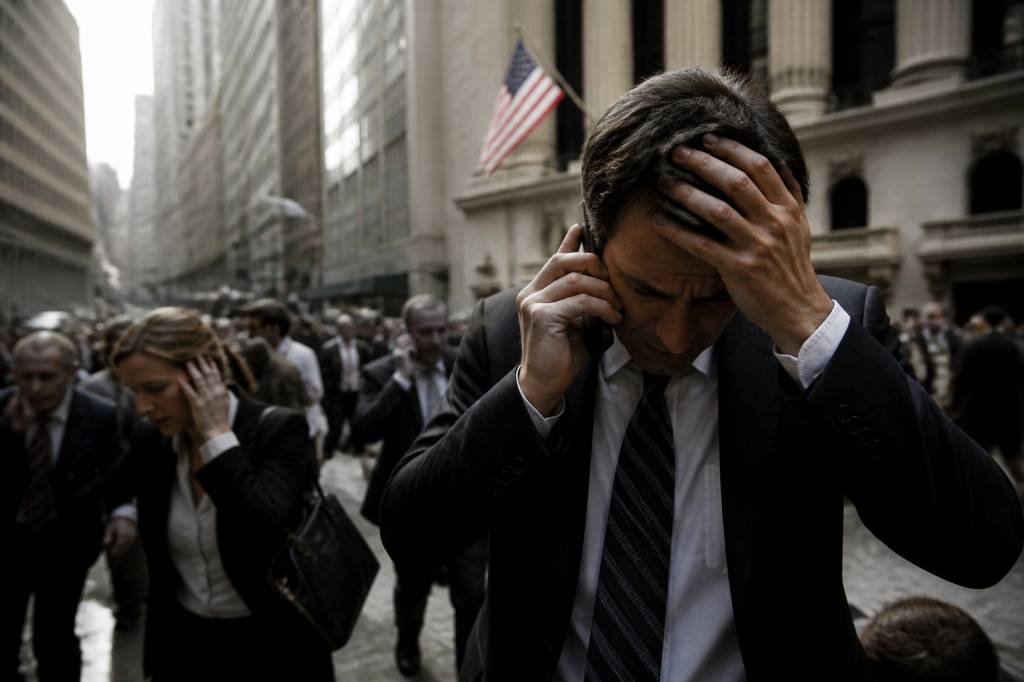
What set the crisis in motion
The 2008 financial crisis did not begin with a single dramatic collapse. It was the result of years of excess leverage, weak lending standards, and a belief that housing prices in the United States would keep rising indefinitely. That assumption turned out to be wrong, and once it broke, the damage spread fast through banks, investment firms, insurers, and ultimately the broader economy.
At the centre of the problem was the U.S. mortgage market. Banks and lenders had issued large volumes of home loans to borrowers with weak credit histories, often through subprime mortgages. Many of these loans were structured with low introductory rates that later reset higher, making repayments much harder to sustain. At the same time, these mortgages were bundled into complex financial products and sold to investors around the world. The logic sounded safe enough: diversify the risk, spread it out, and the system should hold. In practice, the risk was only harder to see.
There was also a more basic issue: too much borrowing. Financial institutions used high levels of leverage, meaning they financed investments with large amounts of debt. When asset prices rose, leverage amplified profits. When prices fell, it amplified losses. That is great on the way up and devastating on the way down. As it turned out, the system had far less shock absorption than many market participants believed.
The build-up before the breakdown
In the early and mid-2000s, housing markets in the U.S. expanded rapidly. Low interest rates, easy credit, and strong demand encouraged borrowing and speculation. Homeownership was politically popular and financially attractive, so lenders were under pressure to expand access. Standards slipped. Documentation requirements weakened. In some cases, income and asset checks were minimal. The phrase “liar loans” became part of the financial vocabulary for a reason.
Investment banks packaged these mortgages into mortgage-backed securities and more complex derivatives such as collateralised debt obligations, or CDOs. These instruments were often given high credit ratings, which encouraged pension funds, insurers, and banks to buy them. The ratings proved far too optimistic. When borrowers began to default in larger numbers, the value of those securities fell sharply.
The warning signs were visible before 2008. Home prices had already started to weaken in 2006. Mortgage delinquencies were rising. A number of lenders had already failed. But the full scale of the problem was still underestimated, partly because the financial products involved were so complex and partly because major institutions were exposed to one another in ways that were not fully transparent.
Key events in the financial crisis timeline
The crisis unfolded through a sequence of shocks rather than one isolated event. Each stage exposed another weakness in the system.
- 2007: the subprime cracks appear — As housing prices softened and interest rates reset higher, subprime borrowers began to default in larger numbers. Two hedge funds tied to mortgage assets at Bear Stearns collapsed in June 2007, an early sign that the damage was moving beyond the housing market itself.
- August 2007: credit markets freeze — Banks became wary of lending to one another because they did not know who held the toxic assets. The interbank lending market tightened, and the Federal Reserve stepped in to provide liquidity.
- March 2008: Bear Stearns is rescued — Bear Stearns, a major investment bank, faced a liquidity crisis and was acquired by JPMorgan Chase with support from the Federal Reserve. The message was clear: even large institutions were vulnerable.
- Summer 2008: pressure intensifies — Mortgage giants Fannie Mae and Freddie Mac came under severe strain. In September, the U.S. government placed both into conservatorship, effectively taking control to prevent a broader collapse in housing finance.
- 15 September 2008: Lehman Brothers fails — The bankruptcy of Lehman Brothers became the defining moment of the crisis. The investment bank’s collapse shocked markets because it showed that authorities would not always step in to save a major player.
- September 2008: AIG is rescued — American International Group, heavily exposed through credit default swaps, required a massive government bailout. Its problems threatened to spread losses across the global financial system.
- Late 2008: market panic deepens — Equity markets fell sharply, money-market funds came under pressure, and global credit conditions deteriorated. In response, governments and central banks launched emergency measures, including bank capital injections, deposit guarantees, and rate cuts.
- 2009: recession becomes visible in the real economy — Unemployment rose, consumer spending weakened, and industrial production slowed. The financial crisis had become an economic crisis.
Each event reinforced the next. Once confidence cracked, the system moved from stress to panic with remarkable speed. Financial markets, after all, are built on trust. When trust disappears, even solvent institutions can struggle to survive.
Why the crisis spread so quickly
The speed of contagion was one of the most important features of the crisis. Financial institutions were not just independently exposed to bad mortgages; they were interconnected through lending, derivatives, and short-term funding markets. That meant one failure could trigger questions about others. Who was safe? Who held the losses? Who would be next?
Short-term wholesale funding made the situation worse. Many banks and investment firms relied on overnight borrowing to finance long-term assets. That works until lenders lose confidence. Then the funding disappears almost instantly. It is a fragile model, and the crisis exposed just how fragile it was.
Transparency was another problem. Investors and even senior executives often did not fully understand the risk sitting on balance sheets. The products were opaque, the leverage was high, and the assumptions behind models were too optimistic. When losses started to mount, confidence in valuations collapsed. If no one trusts the price of your assets, your capital position becomes a moving target.
There was also a behavioural element. During the boom, risk was underpriced because everyone assumed the expansion would continue. Once the market turned, fear replaced complacency. Institutions stopped lending not only because they had losses, but because they feared counterparties had even bigger losses. In a highly connected system, fear is contagious.
Market impact: what happened to stocks, banks and credit
The immediate market impact was severe. Equity indices around the world fell sharply in 2008 as investors rushed to reduce risk. In the U.S., the S&P 500 lost more than a third of its value that year. European and Asian markets also suffered heavy declines. For many investors, diversification provided less protection than expected because the crisis was global and most asset classes moved lower at the same time.
Bank shares were hit especially hard. Institutions with large mortgage exposures or weak funding structures saw their valuations collapse. Some were rescued, others were merged, and some disappeared entirely. The failure of Lehman Brothers remains the most famous bankruptcy of the period, but it was far from the only casualty. Several other firms were forced into emergency deals or government-supported restructuring.
Credit markets seized up. That mattered because credit is the bloodstream of modern finance and business. When banks stop lending, companies cannot easily roll over debt, fund payrolls, or invest in expansion. Households also feel the effects through tighter mortgage lending, weaker consumer credit, and falling confidence. In practical terms, the crisis turned a financial problem into a broader economic slowdown.
Commodity prices, real estate values, and corporate earnings all came under pressure. The housing market itself remained weak for years. Foreclosures rose, especially in regions where speculative buying had been intense. For ordinary households, the crisis meant lost jobs, lower home equity, and in many cases years of financial recovery. For investors, it meant brutal mark-to-market losses and a long period of caution.
Policy responses and emergency measures
Governments and central banks responded aggressively once the scale of the crisis became clear. The Federal Reserve cut interest rates sharply and created emergency lending facilities to support banks and money markets. The U.S. Treasury launched the Troubled Asset Relief Program, or TARP, to inject capital into financial institutions and stabilise the system.
In the UK, the government also moved to recapitalise banks and guarantee certain liabilities. Other countries took similar steps, though the exact tools differed. Central banks around the world expanded liquidity support and, in some cases, entered into coordinated action to prevent a complete freeze in dollar funding markets.
These measures were controversial, and for good reason. Many taxpayers asked why institutions that had taken excessive risks should be rescued. That debate did not disappear after the panic eased. It shaped banking reform, public trust, and the broader discussion about moral hazard. Still, without intervention, the damage could have been far worse.
What changed after 2008
The crisis reshaped financial regulation and market behaviour. Banks were required to hold more capital, improve liquidity management, and face stricter supervision. Stress testing became a standard tool. Regulators paid far more attention to systemic risk, rather than looking only at individual firms in isolation.
Markets also changed. Investors became more sceptical of highly leveraged structures and more cautious about products they could not easily understand. That is not to say financial engineering disappeared. It did not. But the post-crisis environment rewarded clearer risk control and punished blind confidence in ratings or models.
One lasting lesson was that housing is never just housing. When mortgage credit is widely packaged into financial markets, a local problem can become a global one. Another lesson was that liquidity matters as much as solvency. A firm can look healthy on paper and still fail if it cannot fund itself day to day. The crisis made that distinction impossible to ignore.
How to read the crisis today
Looking back, the 2008 financial crisis was not mysterious. The ingredients were visible: weak lending, excess leverage, opaque products, and overconfidence in rising asset prices. The hard part was recognising how those ingredients interacted. Financial systems often appear stable right up until they are not. That is what makes crises so dangerous and so difficult to stop in advance.
For markets, the crisis remains a reference point. Analysts still compare new episodes of stress to 2008 because it set the benchmark for modern financial panic. For policymakers, it remains a reminder that regulation, transparency, and capital buffers are not academic abstractions. They are the difference between a contained shock and a global meltdown.
And for anyone watching the news as the next period of instability begins to build, the lesson is simple: when asset prices rise too smoothly, credit grows too fast, and everyone insists the system is different this time, it may be worth asking a very old question. Different from what, exactly?