


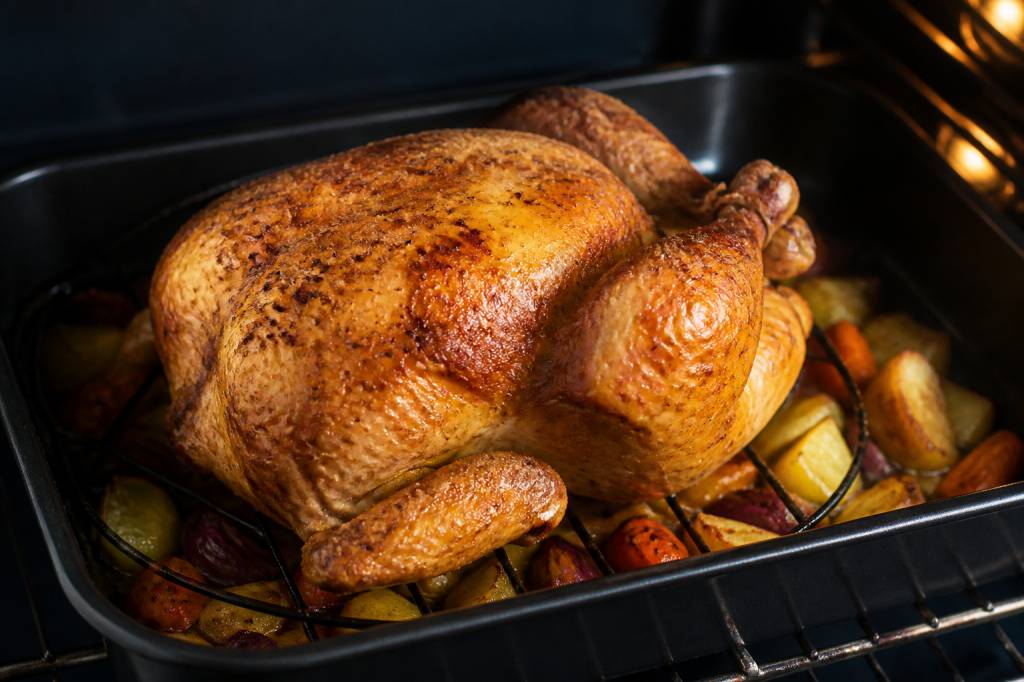
How long does a 1.7kg chicken take to cook?
If you’re roasting a whole chicken that weighs 1.7kg, the key question is simple: how long in the oven before it is safely cooked and still juicy? The short answer is that a 1.7kg chicken typically needs around 1 hour 25 minutes to 1 hour 40 minutes in an oven preheated to 190°C (170°C fan), or about 375°F.
That is a useful starting point, but it is not the whole story. Oven performance varies, chickens differ in shape and fat content, and whether the bird is stuffed changes the timing. If you want predictable results, the best approach is to combine time with temperature checks. In other words: use the clock, but trust the thermometer.
A common rule of thumb for roasting a whole chicken is 20 minutes per 500g, plus 20 minutes extra. For a 1.7kg bird, that works out to roughly 88 minutes. Rounded to practical kitchen terms, that puts you in the 1 hour 25 minutes to 1 hour 40 minutes range.
The best oven temperature for a 1.7kg chicken
For most home ovens, 190°C / 170°C fan / 375°F is a reliable roasting temperature. It is high enough to brown the skin properly while giving the heat time to reach the centre of the meat.
If you go much hotter, the skin may darken too quickly before the meat is cooked through. Too low, and you risk drying out the breast while waiting for the thighs to finish. For a standard roast, moderate heat is usually the safest option.
Here is the practical breakdown:
- 190°C (170°C fan) for a standard roast chicken
- 200°C+ if you want faster browning, but watch carefully
- 160°C–170°C for a slower roast, useful if the bird is large or you prefer a gentler cook
If your oven runs hot or has uneven spots, rotate the bird once during cooking. It is a small step that can prevent one side from looking like it has had a weekend in the sun while the other still needs more time.
Cooking time by method
The cooking time for a 1.7kg chicken depends on how you cook it. Roasting in a fan oven, in a conventional oven, or in a covered dish will all produce slightly different results.
Roasting in a conventional oven
In a conventional oven at 190°C, allow 1 hour 30 minutes to 1 hour 40 minutes. Check the chicken a little earlier if your oven is aggressive or if the bird is sitting on a shallow tray that exposes it to more direct heat.
Roasting in a fan oven
In a fan oven at 170°C, the same 1.7kg chicken will usually be ready in 1 hour 20 minutes to 1 hour 30 minutes. Fan ovens circulate heat more efficiently, so they often cook slightly faster and more evenly.
Using a covered roasting dish
If you roast the chicken covered for part of the time, the meat will stay moist and the skin will brown later. A useful method is to cover the chicken loosely with foil for the first half to two-thirds of the cooking time, then uncover it for the last 20 to 30 minutes. This works well if you are worried about the breast drying out.
Cooking by weight: the quick calculation
If you like a simple formula, this one is easy to remember:
- 20 minutes per 500g for the main cooking time
- Plus 20 minutes extra for a whole bird
For a 1.7kg chicken:
- 1.7kg = 1700g
- 1700g ÷ 500g = 3.4
- 3.4 × 20 minutes = 68 minutes
- 68 + 20 = 88 minutes
So the formula gives you just over 1 hour 25 minutes. In real kitchens, that is a solid estimate, but it is still worth checking for doneness properly rather than relying on the maths alone.
How to know when the chicken is cooked
The most reliable way to test chicken is with a meat thermometer. If you have one, use it. This is especially useful if you want the safety assurance of fully cooked meat without overcooking the breast.
The safe internal temperature for chicken is 75°C in the thickest part of the meat. Some cooks also use the following indicators:
- The juices run clear when the thickest part of the thigh is pierced
- The legs move easily at the joint
- The meat is opaque, with no pink areas near the bone
That said, clear juices alone are not a perfect guarantee. A thermometer gives you the clearest answer and removes guesswork. If the breast reaches temperature before the thighs, let the bird rest. Carryover heat will often finish the job.
What affects the cooking time?
Two chickens that weigh 1.7kg on the scale may not cook in exactly the same time. Several factors influence the result.
Starting temperature of the chicken
A chicken straight from the fridge will take longer than one that has sat out briefly before roasting. You do not want to leave raw poultry at room temperature for long, but letting it sit for 20 to 30 minutes before cooking can help it roast more evenly.
Whether the bird is stuffed
Stuffing adds cooking time because the heat must pass through the centre of the stuffing before it is safe to eat. If your 1.7kg chicken is stuffed, expect the roasting time to increase by at least 15 to 25 minutes, depending on the filling and how tightly the cavity is packed.
It is important to check the stuffing separately. Both the chicken and the stuffing must reach safe temperatures.
The shape of the chicken
A compact chicken tends to cook more evenly than a long, thin bird with a larger breast. Size matters, but shape matters too. A bird with plump thighs and a thick breast may need a little longer than the weight alone suggests.
Your oven’s accuracy
Many domestic ovens are not as accurate as the dial suggests. If your oven runs 10 degrees hotter than indicated, your chicken may brown too quickly. An inexpensive oven thermometer can remove much of that uncertainty.
How to get crispy skin and juicy meat
The challenge is obvious: you want golden skin without sacrificing moisture. That is where technique matters.
Start by patting the chicken dry with kitchen paper. Moisture on the skin turns to steam, and steam is the enemy of crispness. Then season generously with salt. Salt helps draw moisture from the surface and improves flavour.
Some useful methods for better results include:
- Dry the skin well before roasting
- Season the cavity and skin for better flavour throughout
- Rub with oil or butter to encourage browning
- Leave space around the chicken so hot air can circulate
- Let the chicken rest before carving
If you like extra flavour, place lemon halves, garlic, thyme, or rosemary inside the cavity. These aromatics are more about fragrance than deep seasoning, but they do add something useful to the finished roast. You are cooking dinner, not writing a perfume ad, so keep it sensible.
Resting time matters
Once the chicken is cooked, do not carve it immediately. Resting is not optional if you want good results. Allow the bird to rest for 15 to 20 minutes before carving.
Why? Because resting lets the juices redistribute through the meat. If you cut too early, those juices run onto the board instead of staying in the chicken. That means drier meat and a less satisfying roast.
Cover it loosely with foil while resting. Do not wrap it tightly, or the skin will steam and lose its crispness. Loosely is the key word.
Should you cover the chicken while cooking?
Covering the chicken can be useful if the skin is browning too quickly. A loose tent of foil protects the top from over-colouring while the inside continues to cook. Remove the foil for the final stage if you want a crisp finish.
This method is especially helpful if:
- Your oven has hot spots
- The bird is browning too fast before the centre is ready
- You are roasting with vegetables and want to prevent excessive colour
If the skin is still pale near the end, take the foil off and increase the heat slightly for the final 10 minutes. Watch closely, because the difference between golden and burnt can be a matter of minutes, not hours.
Can you roast vegetables with a 1.7kg chicken?
Yes, and it is often a smart move. Potatoes, carrots, onions, and parsnips all work well alongside roast chicken. The trick is to cut them into even pieces and not overcrowd the tray.
Vegetables may need a little head start, especially potatoes. A sensible approach is to parboil potatoes first or add them to the tray early, then include quicker-cooking vegetables later. If the tray is too crowded, the vegetables will steam rather than roast, and nobody gets what they wanted.
Adding vegetables can also help with flavour. The chicken drippings season the tray, and the vegetables absorb the juices. It is one of those rare kitchen situations where efficiency and taste actually agree.
Common mistakes to avoid
Getting a roast chicken wrong is usually the result of a few avoidable errors. The good news is that they are easy to fix.
- Underestimating resting time and carving too early
- Relying only on the clock instead of checking internal temperature
- Skipping seasoning, which leaves the meat bland
- Overcrowding the oven, which affects circulation and browning
- Cooking at too high a temperature, which dries out the breast
- Forgetting the stuffing adds time
If you want consistent results, avoid improvising too much unless you know your oven well. Roast chicken is straightforward, but it rewards discipline more than guesswork.
A simple step-by-step roasting guide
If you want a practical method for a 1.7kg chicken, this is a dependable approach:
- Preheat the oven to 190°C / 170°C fan
- Pat the chicken dry
- Season inside and out with salt, pepper, and any herbs you like
- Place the bird in a roasting tin, breast-side up
- Roast for about 1 hour 30 minutes, checking near the end
- Use a thermometer to confirm the thickest part reaches 75°C
- Rest for 15 to 20 minutes before carving
If the juices run clear and the thermometer confirms the temperature, you are in good shape. If not, give it another 10 minutes and check again. Cooking is not a race, even if everyone suddenly appears in the kitchen the moment the smell reaches the hallway.
What if the chicken is slightly over or under?
If the chicken is a little undercooked, return it to the oven and check again in 5 to 10 minutes. Make sure the thickest part of the thigh and breast reaches the safe temperature.
If it is slightly overcooked, all is not lost. Serve it with gravy, pan juices, or a sauce to add moisture back to the plate. Slice the breast thinly and use the leg meat in a dish with more liquid if needed. In practical cooking, rescue matters as much as precision.
The bottom line for a 1.7kg chicken
A 1.7kg chicken usually takes around 1 hour 25 minutes to 1 hour 40 minutes in a standard oven at 190°C / 170°C fan. The most reliable check is internal temperature: aim for 75°C in the thickest part of the bird. Then let it rest for at least 15 minutes before carving.
That combination of sensible timing, proper temperature checking, and a short rest is what turns a good roast chicken into a reliable one. And in home cooking, reliability is often the difference between a decent dinner and one worth repeating next week.