


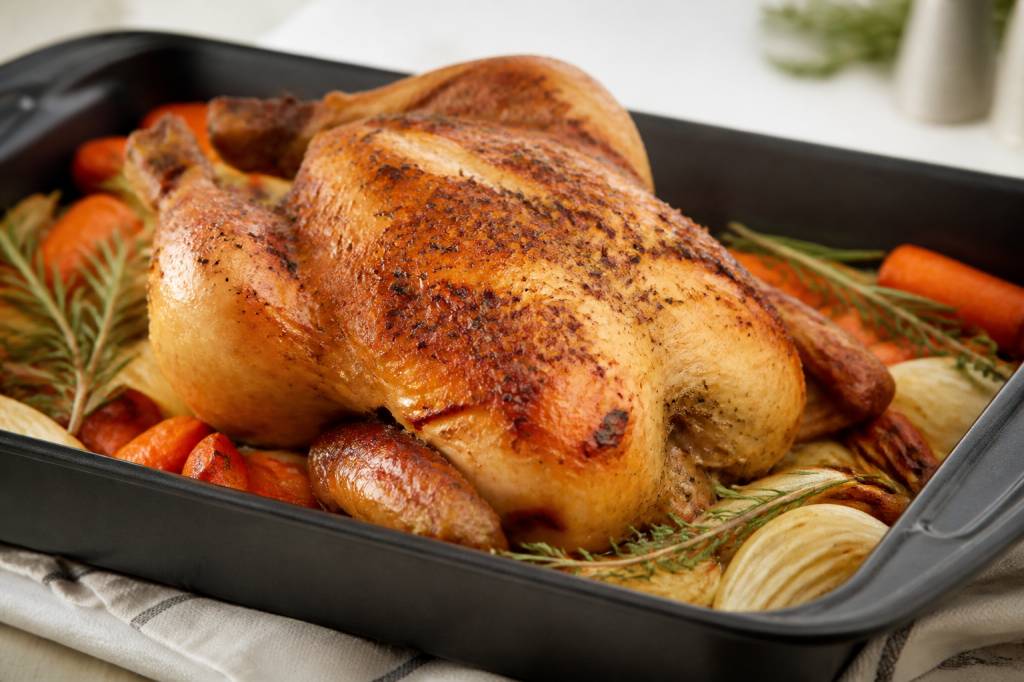
How long to cook a 1.9kg chicken
A 1.9kg chicken is a very workable size for a family roast: substantial enough to feed several people, but not so large that it turns the kitchen into a logistics exercise. The key question is simple enough: how long should it stay in the oven?
The short answer is this: a 1.9kg whole chicken usually needs around 1 hour 35 minutes to 1 hour 50 minutes in an oven preheated to 180°C fan, or around 200°C conventional. If you prefer a slightly more conservative approach, plan for about 20 minutes per 500g, plus 20 minutes extra. For a 1.9kg bird, that puts you in the same general range.
That said, roasting is not a stopwatch sport. Oven performance varies, chickens differ in shape, and stuffing changes the timing. The safest way to judge doneness is by internal temperature and visible cues, not just the clock.
The standard cooking formula
The old kitchen rule still holds up well for a plain whole chicken:
- 20 minutes per 500g
- Plus 20 minutes for the whole bird
Using that formula, a 1.9kg chicken works out like this:
- 1.9kg = 1900g
- 1900g ÷ 500g = 3.8
- 3.8 × 20 minutes = 76 minutes
- 76 minutes + 20 minutes = 96 minutes
So the estimated roasting time is about 1 hour 36 minutes. In practical terms, that means you should start checking the bird a little before the 90-minute mark, especially if your oven runs hot or the chicken is on the smaller side of 1.9kg.
Oven temperature matters more than most people think
Time alone does not guarantee a good roast. The oven temperature shapes the texture of the skin, the juiciness of the meat, and how evenly the bird cooks.
For a 1.9kg chicken, a reliable approach is:
- 180°C fan
- 200°C conventional
- Gas mark 6 as a rough equivalent
At this temperature, the chicken roasts steadily without drying out too quickly. If you crank the heat much higher, the skin may brown too fast before the centre is fully cooked. Too low, and you may end up with pale skin and longer cooking times than expected.
If your oven is known to be inaccurate, trust a thermometer over the dial. Many domestic ovens drift from their displayed temperature by more than people realise, which is one reason a roast can go from perfect to disappointing with very little warning.
How to tell when the chicken is done
The most dependable signal is the internal temperature. Insert a meat thermometer into the thickest part of the thigh, making sure it does not touch bone. The chicken is ready when it reaches 75°C in the thickest part of the meat.
If you do not have a thermometer, there are still useful checks:
- The juices should run clear when you pierce the thigh.
- The legs should move easily in the joints.
- The meat near the thigh bone should no longer look pink.
These are sensible indicators, but temperature is more reliable. If you are serving guests, a thermometer takes the guesswork out of the process. It is one of those small purchases that earns its keep quickly, especially if roast chicken is a regular feature on your table.
Should you roast a 1.9kg chicken covered or uncovered?
For a crisp skin, roast the chicken uncovered for most of the cooking time. Some cooks like to start with a loose foil tent for the first part of the roast, then remove it near the end to encourage browning. That can work well if the skin is colouring too quickly, but in many standard ovens it is not necessary.
If you want the skin to be golden and evenly crisp:
- Pat the chicken dry before seasoning.
- Rub the skin with oil or butter.
- Roast on a tray or in a shallow roasting tin.
- Let hot air circulate around the bird.
Moisture is the enemy of crisp skin. A wet chicken tends to steam rather than roast, which is fine if you are aiming for soft skin and not fine if you want the classic roast finish.
Stuffed chicken needs longer
If the chicken is stuffed, the cooking time changes. Stuffing slows the transfer of heat, which means the bird needs longer in the oven and the stuffing itself must reach a safe temperature. That is where a lot of home roasting mistakes happen.
For a stuffed 1.9kg chicken, allow extra time and check both the meat and the centre of the stuffing. If you are in any doubt, it is usually safer to cook stuffing separately. That gives you better control, more even cooking, and less risk of serving undercooked stuffing at the centre of a perfectly browned bird.
If you do stuff the chicken, make sure the cavity is loosely filled rather than packed tight. A tightly stuffed bird can cook unevenly, and nobody needs that sort of drama at Sunday lunch.
What to do before the chicken goes in the oven
A good roast starts before the oven is even turned on. Simple preparation makes a noticeable difference to both timing and flavour.
- Take the chicken out of the fridge 30 to 45 minutes before cooking so it is not icy-cold in the centre.
- Preheat the oven properly. Do not guess. Let it reach temperature before the chicken goes in.
- Season generously with salt and pepper, inside and out.
- Add herbs or aromatics if you like: lemon, garlic, thyme, rosemary, or onion.
- Oil the skin to help it brown.
Bringing the chicken closer to room temperature helps it cook more evenly. A fridge-cold bird placed into the oven can spend too long in the lower temperature range, which is not ideal for texture or timing.
A practical roasting method for a 1.9kg chicken
If you want a reliable method rather than a vague timing estimate, use this approach:
- Preheat the oven to 180°C fan or 200°C conventional.
- Pat the chicken dry with kitchen paper.
- Season the cavity and the skin.
- Rub the skin with oil or softened butter.
- Place the bird breast side up in a roasting tin.
- Roast for about 1 hour 35 minutes, checking from the 1 hour 25 minute mark.
- Baste once or twice if desired, though it is not essential.
- Confirm the internal temperature has reached 75°C.
- Rest before carving.
If the skin is browning too quickly before the centre is cooked, loosely cover the bird with foil. If the skin is pale near the end, raise the oven temperature slightly for the final 10 minutes. Small adjustments like that are often enough to fix the problem without overcomplicating the process.
Why resting the chicken is not optional
Once the chicken leaves the oven, do not carve immediately. Resting is essential. It allows the juices to redistribute through the meat instead of running onto the board the moment you cut into it.
For a 1.9kg chicken, rest it for 15 to 20 minutes loosely covered with foil. That resting period improves tenderness and gives you time to finish the sides, make gravy, or recover from the mild panic of realising the potatoes are not yet crispy enough.
Resting also helps bring the final internal temperature to a stable point. In other words, the chicken keeps gently finishing itself after it comes out of the oven.
Common mistakes that affect cooking time
Even with a straightforward roast like this, a few errors can throw the timing off.
- Overcrowding the tin: this traps steam and weakens browning.
- Using a very small or very deep roasting dish: heat does not circulate as well.
- Skipping the thermometer: guessing can lead to undercooked thigh meat.
- Opening the oven too often: every check drops the temperature.
- Relying on one exact minute count: oven variation is real.
Another common issue is misunderstanding carryover cooking. If the chicken is already near 75°C when you remove it, resting will finish the job. If it is still well below that, resting will not magically save it. The thermometer should guide the decision.
What sides work best with a roast chicken?
A 1.9kg roast chicken is versatile enough to anchor a simple supper or a full Sunday spread. The classic pairings are obvious for a reason: they work.
- Roast potatoes
- Carrots
- Parsnips
- Green beans
- Yorkshire puddings if you are leaning into a larger roast-style meal
- Pan gravy made from the roasting juices
If you want to keep the meal lighter, a green salad and new potatoes are enough. If you want comfort food, add stuffing, roasted vegetables, and plenty of gravy. Chicken is not fussy. It does its job and lets the sides do the talking.
Quick timing guide for a 1.9kg chicken
Here is the simple version if you need the answer fast:
- Oven temperature: 180°C fan / 200°C conventional
- Cooking time: about 1 hour 35 minutes to 1 hour 50 minutes
- Check from: 1 hour 25 minutes onward
- Safe internal temperature: 75°C in the thickest part
- Resting time: 15 to 20 minutes
That gives you a roast chicken that is cooked through, properly rested, and ready to carve without losing half its juices to the chopping board.
Final practical advice
If you remember only one thing, make it this: use time as a guide, but use temperature as the decision-maker. A 1.9kg chicken is usually done in around an hour and a half, but the exact finish depends on the oven, the shape of the bird, and whether it is stuffed.
For most home cooks, the safest and most efficient method is straightforward. Preheat the oven, season well, roast uncovered at a steady temperature, check the thigh with a thermometer, then rest before carving. Do that, and the result should be a roast chicken with crisp skin, juicy meat, and no guesswork.
That is the difference between a decent roast and the one everyone remembers.