


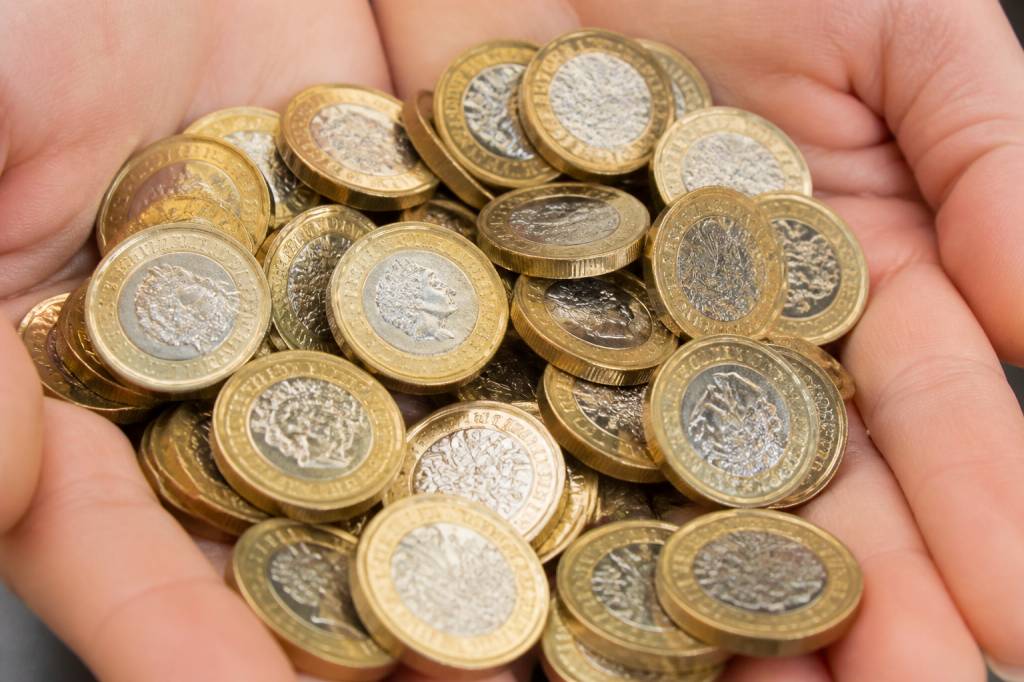
A coin worth £1 million sounds like a headline designed to stop you mid-scroll. But in the world of numismatics, the price is not a joke, a typo, or a PR stunt. Some coins really do trade for seven figures, and the reasons are usually rooted in scarcity, condition, historical importance, and collector demand rather than the metal in the coin itself.
That matters for more than collectors. Ultra-rare coins sit at the intersection of history, economics, and national identity. They show how value can be created by scarcity and story, not just by raw materials. They also reveal how a small piece of metal can become a major asset.
What a £1 million coin actually is
When people say “£1 million pound coin,” they usually mean one of two things. Either the coin has a face value of £1 million, which is extremely rare and mostly theoretical, or the coin is worth around £1 million in the market because collectors are willing to pay that amount.
In practice, the second meaning is the one that matters. A coin does not need to be made of gold or platinum to command a huge price. A common-looking silver coin can be worth far more than a luxury car if it is the only known example, or one of a tiny number, in exceptional condition.
The coin’s value is usually set by a mix of rarity and demand. If there are many buyers and very few surviving examples, the price can rise quickly. That is basic market logic. The twist is that the “product” is often 100 or 200 years old, and the supply is fixed forever.
Why some coins reach seven figures
The key driver is scarcity. Not every rare coin is valuable, but every million-pound coin is rare in some meaningful way. Sometimes the coin was minted in tiny numbers. Sometimes most examples were melted down. Sometimes a design error, a test strike, or a short-lived issue makes the coin historically important.
Condition also plays a huge role. A coin that survived in near-perfect state can be worth dramatically more than the same coin worn down by circulation. Collectors pay for preservation because condition affects both beauty and survivability. A coin with sharp detail, original surfaces, and minimal handling can command a premium that seems disproportionate to the metal content. It is not about ounces. It is about survival.
Historical context matters too. Coins linked to major reigns, political changes, or royal events often carry a premium because they connect the buyer to a specific moment in time. The story is part of the asset. In some cases, the story is the asset.
Then there is provenance. If a coin was owned by a famous collector, sold at a landmark auction, or verified by a respected expert, confidence rises. In a market built on rarity, trust is currency.
Examples of coins that have crossed the million-pound line
Some of the most famous high-value coins are not modern pound coins at all, but historical British pieces that have become touchstones in the collecting world. The rarest sovereigns, pattern coins, trial pieces, and ancient British coins can all fetch extraordinary sums when they come to market.
One of the most cited examples is the 1933 penny, a coin so scarce that only a few are known to exist and each has become the stuff of auction legend. It is not a £1 coin, but it demonstrates the principle clearly: rarity plus story plus demand can produce a valuation far beyond face value.
Pattern coins are another category worth watching. These are experimental designs struck before a final version was chosen. Because they were never intended for circulation, they were made in tiny numbers. If one appears at auction, competition can be intense.
Modern commemorative coins can also climb in value, though hitting seven figures is less common. Most modern issues are produced in large quantities, which limits their long-term investment potential. Still, special editions with unusual minting errors, low mintages, or strong collector followings can perform well.
Face value versus market value
This is where casual observers often get confused. A coin’s face value is what it says on the tin, so to speak. A £2 coin is legal tender for £2. But a collector may pay much more if the coin is scarce or desirable. That premium is market value.
In the case of a £1 million coin, the face value may be irrelevant. Some pieces are never intended for circulation. Others were once legal tender but now trade as collectibles, much like rare stamps or vintage watches.
The gap between face value and market value can be enormous. A coin could be worth a few pounds as currency but thousands, tens of thousands, or even millions as an artefact. The difference comes from what collectors are buying: not spending power, but rarity, history, and condition.
Why collectors pay so much
Collectors are not just buying metal. They are buying exclusivity. Owning a coin that only a handful of people can possess creates status, but it also creates a sense of stewardship. Rare coins are portable pieces of history.
There is also an investment angle. Like fine art or vintage wine, exceptional coins can hold value well when broader markets are volatile. They are not risk-free, and they can be illiquid, but top-tier pieces have a long record of attracting serious money.
Auction psychology plays a part too. When two determined bidders want the same rare coin, price can move quickly. Competitive bidding can push a piece above expectations because the market for truly rare coins is small, informed, and often global.
And yes, there is a little romance in it. A coin can pass through empires, wars, economic crashes, and private collections, then reappear under auction lights a century later. That kind of continuity has its own appeal.
How experts assess a coin’s value
Professional grading is crucial. Numismatists examine the coin’s strike quality, wear, luster, marks, and overall preservation. A coin may be rare, but if it is heavily damaged, its value can fall sharply.
Authentication is equally important. Forgery is a real issue in the high-end market, especially where the potential payoff is large. Serious buyers rely on reputable auction houses, grading services, and independent specialists to confirm what they are buying.
Context also shapes price. A coin discovered in a hoard, for example, may be more attractive if the find is well documented. If a coin has an unusual mint error or a striking historical backstory, that can add another layer of appeal.
For buyers and sellers alike, one rule stands out: the coin itself is only part of the equation. Documentation, certification, and market timing all matter. A rare coin without paperwork may still be valuable, but the lack of certainty can suppress price.
What makes these coins important beyond the price tag
Million-pound coins matter because they preserve history in a tangible form. Unlike a document locked in an archive, a coin can be held, studied, photographed, and passed on. It is both object and evidence.
They also remind us that money is not just a medium of exchange. It is a record of political power, artistic taste, and state authority. Look at a coin closely enough and you can read what a country valued at a particular moment: monarchs, borders, symbols, slogans, and economic priorities.
There is a wider economic lesson too. Coins show how value can be shaped by narrative. In ordinary markets, price is driven by utility. In collecting markets, price is driven by uniqueness and meaning. That is why a small disc of metal can be worth more than a house.
For museums, rare coins are important teaching tools. They help illustrate trade, empire, taxation, and technological change. Minting methods changed over time, and rare coins often capture those shifts better than textbooks do.
Are £1 million coins a good investment
Sometimes, but not for everyone. The high end of the coin market is specialised, opaque, and expensive to enter. A buyer needs knowledge, patience, and a tolerance for long holding periods. This is not a market for quick flips or impulse purchases.
Liquidity is one issue. A rare coin may be valuable, but finding the right buyer can take time. Fees, insurance, storage, and authentication costs also eat into returns. That means the headline price is not the full story.
Still, the strongest examples in the best condition have historically performed well. Coins with genuine rarity and strong provenance can attract international demand, which helps support prices over time.
For most people, the better approach is not to chase million-pound pieces, but to understand the market. Learning how rarity, grade, and provenance affect value is useful even if your own coin collection is modest.
What to look for if you think you have something rare
If you find an old coin, do not clean it. That is the first rule. Cleaning can damage the surface and reduce value. Collectors usually prefer original condition, even if the coin looks a little dull.
Check the date, mint mark, and any unusual features. Errors, missing details, and odd inscriptions can matter. Compare the coin with verified references, then speak to a reputable dealer or auction house before making assumptions.
Be realistic as well. Most old coins are not worth life-changing sums. But some are worth far more than people expect, especially if they are rare varieties or high-grade examples. The difference between “interesting” and “valuable” is often small, but it is measurable.
If you are considering selling, get more than one opinion. The market can vary depending on buyer interest and timing. A specialist valuation is usually worth the effort, especially for anything that might be significant.
Why the subject keeps attracting attention
Part of the appeal is simple human curiosity. People like stories in small objects. A coin is easy to understand, easy to display, and easy to imagine passing through history.
There is also a public fascination with value that seems disconnected from everyday logic. Why should a tiny piece of metal be worth more than a luxury apartment? Because scarcity and significance often matter more than size or material. That answer may be unsatisfying, but it is the reality of the market.
In the end, million-pound coins are not just expensive collectibles. They are historical documents, economic assets, and cultural artefacts rolled into one. They matter because they show how societies assign value, preserve memory, and reward rarity. And for a piece of metal the size of a coin, that is quite a lot to carry.