
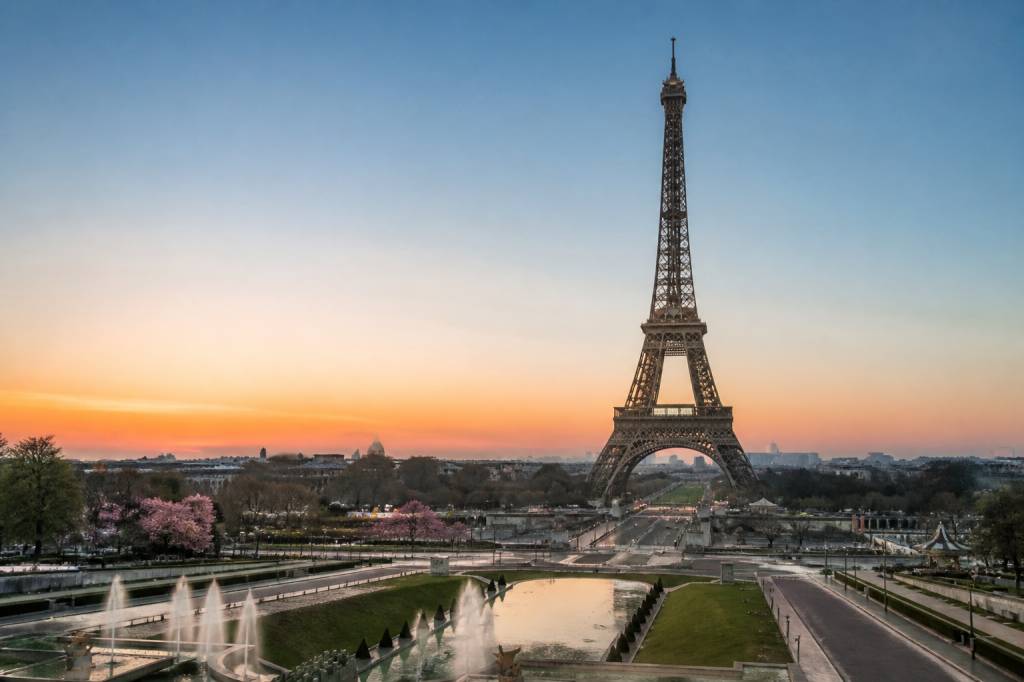
10 amazing facts about france you probably didn’t know
France is one of the most visited, most discussed, and most politically influential countries in the world. Yet beyond the clichés of cafés, cathedrals, and the Eiffel Tower, there is a long list of facts that are less familiar but often more revealing. Some are historical quirks. Others are geographic oddities or policy choices that make France stand out in Europe and beyond.
Here are ten facts about France that many people do not know, but probably should.
France spans more time zones than any other country
France is usually associated with one mainland time zone. In reality, it covers 12 time zones in total, more than any other country on Earth. That is not a typo. The reason is simple: France’s overseas territories are spread across the globe, from the Caribbean to the Pacific and the Indian Ocean.
This gives France a geographic footprint that is far larger than most people expect. New Caledonia, French Polynesia, Guadeloupe, Martinique, Réunion, French Guiana, and several smaller territories all contribute to that total. The result is a country that can essentially operate around the clock across multiple regions. For a nation often described as compact in Europe, its global reach is anything but.
The French railway once set a world record for speed
France has long been associated with high-speed rail, but its record-breaking history is not widely known outside transport circles. In 2007, a specially modified TGV set a world rail speed record of 574.8 km/h, or 357.2 mph, on a test track. That record still stands for conventional rail on steel wheels.
The achievement was not just a technical stunt. It reflected decades of investment in rail infrastructure and engineering. The TGV network remains one of the most efficient intercity rail systems in the world, linking major French cities quickly and, in many cases, making domestic flights unnecessary. For a country that talks often about climate policy and public infrastructure, the rail system is one of the clearest examples of both.
France is the most visited country in the world
France consistently ranks as the world’s top tourist destination, welcoming tens of millions of international visitors each year. Paris gets most of the attention, of course, but the country’s appeal is broader than its capital. The French Riviera, the Loire Valley, Normandy, Provence, Brittany, and the Alps all draw huge numbers of visitors.
The scale matters. Tourism is a major economic sector in France, supporting hotels, restaurants, transport networks, cultural institutions, and local businesses across the country. It also creates pressure: crowded city centres, seasonal strain on transport, and rising costs in popular destinations. Still, the numbers remain impressive. If a place keeps attracting visitors at that level year after year, it is probably doing something right.
There are more than 1,500 types of French cheese
France’s cheese reputation is not marketing. It is a serious part of national identity, agriculture, and regional culture. Estimates vary, but France produces well over 1,000 distinct cheeses, and some sources put the number closer to 1,500 when local and artisanal varieties are included. That means there is likely a cheese for every preference, mood, and budget.
From Camembert in Normandy to Roquefort in the south and Comté in the east, French cheese reflects regional diversity. Many varieties are protected by geographic designation rules, which tie production methods to specific places. The French take this seriously because cheese is not treated as a novelty. It is part of everyday life. In many households, a proper meal without cheese feels incomplete. That is not an exaggeration; it is a cultural norm.
France has the largest exclusive economic zone in the world
Thanks to its overseas territories, France controls the world’s largest exclusive economic zone, or EEZ. An EEZ is the area of sea in which a country has special rights to explore and use marine resources. France’s EEZ covers more than 10 million square kilometres, giving it huge influence over fisheries, seabed resources, shipping lanes, and maritime research.
This is one of the clearest examples of how France’s global geography translates into strategic power. Most people think of France as a European state. In maritime terms, it is a global power with interests in the Atlantic, Pacific, Indian Ocean, and beyond. That matters for defence, diplomacy, and environmental policy. It also means France has more to say about ocean governance than many much larger mainland countries.
The French invented the metric system
The metric system is so normal today that it is easy to forget it was once an innovation. France played the central role in creating it during the French Revolution, when officials sought a measurement system that was rational, universal, and based on nature rather than local custom. The goal was straightforward: replace confusion with consistency.
That shift turned out to be globally important. Today the metric system is used in most countries and in science across the world. France’s role in its creation is a reminder that some of the most influential ideas are not military or political, but administrative. A better way to measure things may not sound dramatic, but it can reshape trade, education, engineering, and international cooperation for centuries.
There is a law against naming a pig Napoleon
French law has a long history, and some of it is oddly specific. One of the more unusual examples is a rule that reportedly prohibited naming a pig “Napoleon.” The logic was tied to respect for the legacy of Napoleon Bonaparte, one of the most important and controversial figures in French history.
Whether this kind of rule still feels relevant is another matter, but it reflects how deeply historical memory runs in France. Napoleon is not just a former ruler. He is a symbol of state power, military ambition, legal reform, and national myth-making. In France, history is not something kept behind glass. It often shapes language, politics, and even the sort of jokes people think twice about making.
France has the most Nobel Prize winners for literature
France has produced more Nobel Prize winners in literature than any other country. That record is not accidental. French literary life has long been influential, with strong traditions in philosophy, criticism, fiction, poetry, and political writing. Paris in particular has served as a magnet for writers, artists, and intellectuals from around the world.
The list of French literary laureates includes figures such as Sully Prudhomme, Anatole France, Roger Martin du Gard, Saint-John Perse, and Patrick Modiano. More broadly, French publishing, academic debate, and cultural journalism have helped shape how literature is discussed globally. Even people who do not read French can feel the impact of French intellectual traditions in modern literature, film, and political thought.
France was the first country to ban supermarkets from wasting food
In 2016, France became one of the first countries in the world to require large supermarkets to donate unsold food instead of destroying it. The law was designed to cut waste and redirect edible products to charities and food banks. It is a practical policy with a clear social purpose.
This matters because food waste is not a symbolic issue. It affects emissions, resource use, and poverty. France’s approach showed that regulation can change behaviour without waiting for voluntary promises to do the job. The policy also drew international attention because it tackled a familiar problem in a direct way. Why throw away food that can still be eaten? Sometimes the obvious question is the one that changes the law.
French is an official language on five continents
French is not just the language of France. It is an official or administrative language in dozens of countries and territories across Africa, Europe, North America, the Caribbean, and the Pacific. As a result, French is spoken on five continents and remains one of the most widely used languages in diplomacy and international organisations.
This global presence comes from France’s colonial history, but also from the continuing size of the Francophone world. Countries such as Canada, Belgium, Switzerland, Senegal, Ivory Coast, Morocco, Haiti, and many others all contribute to the language’s reach. In practical terms, that means French is more than a national language. It is a global network of communication, education, and cultural exchange.
France has a village that receives a special daily visit from a priest by cable car
In the Alpine village of Saint-Gervais, the landscape itself shapes daily life. While France has many mountain communities, some are connected by infrastructure that is unusual even by European standards. In certain parts of the Alps, access routes include cable cars, funiculars, or steep mountain roads that make ordinary routines more complicated than they look on a map.
The broader point is that France is full of local realities that do not fit the postcard image. Rural and mountain life can be highly adapted to geography, weather, and distance. That is one reason France can feel like several different countries at once: urban, coastal, industrial, agricultural, alpine, and overseas. The diversity is real, and it runs deeper than tourism brochures suggest.
France’s influence comes from more than cuisine, fashion, and landmarks. It is a country with unusual geographic reach, serious institutional weight, and a habit of turning practical ideas into global standards. Some of these facts are surprising because they are hidden in plain sight. Others matter because they help explain how France works today, not just how it looks from abroad.
If there is one clear lesson, it is this: France is rarely as simple as it first appears. And that is exactly what makes it worth paying attention to.