The Liberal Democrats are facing a period of acute internal anxiety. After the remarkable breakthrough in 2024 that delivered the party its largest ever Commons presence, whispers of discontent have turned into something closer to open concern: a number of Lib Dem MPs are reportedly restless about strategy and momentum, and some insiders fear that defections to the Green Party could follow if the leadership cannot arrest the drift.
From surge to stall: what’s gone wrong?
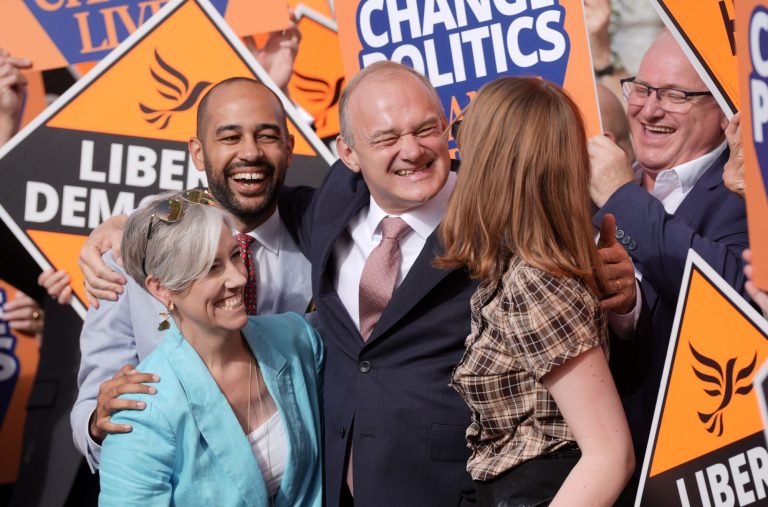
Ed Davey’s leadership achieved a high‑water mark in 2024, turning the Liberal Democrats into the third largest party in the House of Commons. Many of the gains came in the so‑called “blue wall”, where former Conservative voters swung behind the Lib Dem message. But the euphoria of the surge has faded. Polling this week placed the party down to around 14 per cent nationally, behind Reform, the Conservatives, the Greens and Labour – a sobering reminder that electoral momentum can be fragile.
Inside Westminster the narrative is blunt: the party has failed to convert the 2024 breakthrough into sustained forward motion. MPs complain privately that the strategic direction is muddled and that the leadership has not followed through with bold policy initiatives to consolidate the gains. For MPs who won unexpectedly in traditionally Conservative seats, the pressure is real – their majorities can evaporate if the Lib Dems do not hold and attract the centre ground.
Why some MPs could look to the Greens
The Green Party, under Zack Polanski — himself a former Lib Dem — has sharpened its messaging and widened its appeal beyond purely environmental issues. Recent polling suggests the Greens have overtaken the Lib Dems in parts of the country, and that change has altered the calculus for some centre‑left and environmentally minded Lib Dem parliamentarians.
Factional frustration and leadership questions
Several Labour and Lib Dem commentators have noted a palpable frustration among MPs. “Everyone’s frustrated,” one Lib Dem MP told PoliticsHome. The critique is not about Ed Davey’s personal popularity — many colleagues acknowledge he has been an effective communicator on key issues such as opposition to Donald Trump’s policies — but about a sense that tactical caution has replaced strategic ambition.
That frustration spills into leadership conversations. While there is no immediate threat to Davey’s position, murmurs about potential successors are circulating. Names like Deputy Leader Daisy Cooper, former leadership hopeful Layla Moran and party president Josh Babarinde are mentioned as possible alternatives should the party decide a change is necessary before the next general election.
Policy drift or policy opportunity?
The party’s internal debate on direction is stark. Some MPs argue the Lib Dems should double down on centre‑right economic credibility to hold former Conservative voters — showing fiscal responsibility and a clear economic offer. Others advocate a shift leftwards: amplify social liberalism and green economic policy to recapture progressive voters who might be tempted by Labour or the Greens.
Recent internal strategy documents, reportedly optimistic about converting principled opposition to US strikes on Iran into electoral gain, underline a party searching for defining issues. But critics argue that prominent foreign policy stances alone will not substitute for a coherent domestic programme that gives voters a reason to choose the Lib Dems at scale.
What the Greens are offering
Zack Polanski’s Greens are positioning themselves as both principled and pragmatic: widening the party beyond its environmental core to address housing, social justice and local governance. Their explicit invitation to like‑minded MPs suggests a recruitment strategy aimed at eroding the Lib Dems’ parliamentary base, particularly where the Greens sense political traction.
The local angle: electoral realities
For MPs who won “blue wall” seats in 2024, the local picture matters most. These MPs are conscious that their victories rested on a complex mix of local campaigning, national mood and Conservative weakness. To hold those constituencies, they need an electoral strategy that signals competence on bread‑and‑butter issues while retaining progressive credibility. If the national party cannot provide that argument, MPs will consider alternatives that better match their constituency dynamics.
Choices for the Lib Dem leadership
What happens next?
The spring conference in York provides an immediate pressure point. The party’s tone and policy outputs over the coming weeks will shape whether restlessness becomes rupture. As things stand, the leadership does not appear to be under imminent threat, but unresolved strategic tensions and a destabilising external vector — a rising Green Party — mean the Lib Dems cannot afford complacency. For MPs in marginal seats, the choice will be pragmatic: stay the course and push for change from within, or jump ship to a party whose trajectory appears more favourable in local polls.