


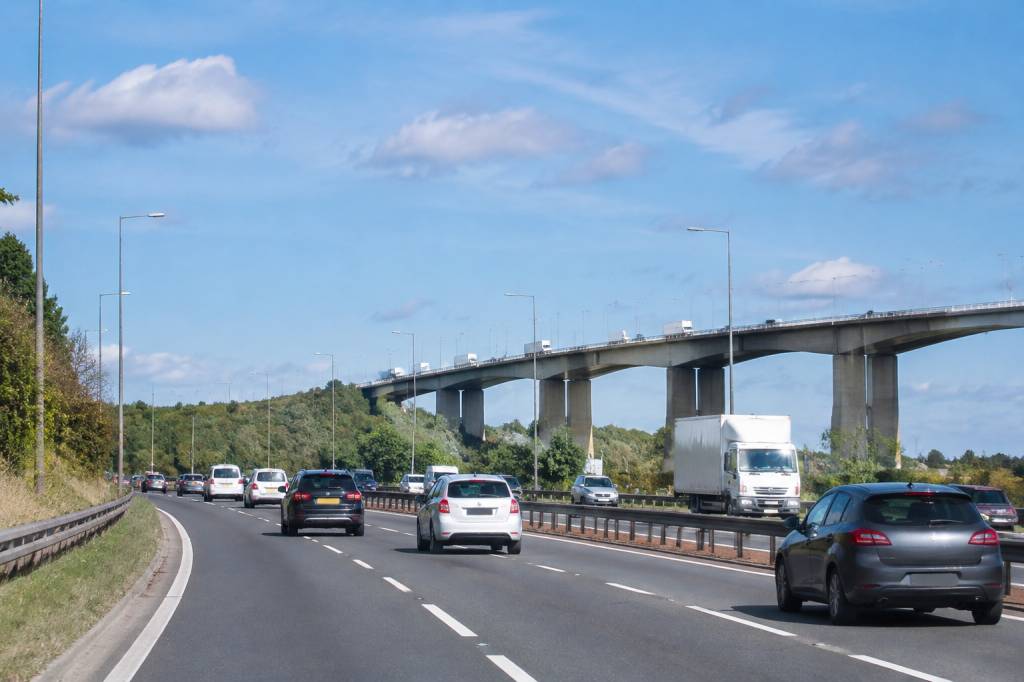
The Orwell Bridge is one of the most important links in Suffolk’s road network. When it closes, the effects can be felt across Ipswich and beyond: journeys take longer, local roads become busier, and drivers may need to rethink their route at short notice.
The bridge carries the A14 over the River Orwell, connecting routes to the east and west of Ipswich. It can be closed when strong winds make conditions unsafe, particularly for high-sided vehicles. Other incidents or emergency works can also disrupt traffic. Because the situation can change quickly, the most useful first step is to check whether the bridge is closed before setting out.
How to check the latest closure information
There is no reliable substitute for a live update when a road closure may be under way. Check current information from National Highways and Suffolk Police, as well as local traffic reports, before travelling. Traffic signs on the approach to the bridge are also important: follow any closure notices and diversion signs, even if a navigation app suggests a different route.
Look for the time of the latest update, not just the headline. A post saying that the bridge is closed may have been published before conditions changed. Likewise, an announcement that it has reopened does not mean traffic has cleared. Queues can remain on the A14 and surrounding roads after the barriers are lifted.
If you are already driving, do not check your phone behind the wheel. Ask a passenger to look up the latest information, or pull over somewhere safe before using a device. A few minutes spent checking conditions before departure can be more useful than trying to reroute while approaching a queue.
Why the Orwell Bridge closes
The most familiar reason for a closure is high wind. The bridge is exposed, and strong gusts can create particular risks for vehicles with a large side profile, such as lorries, vans with high-sided loads, caravans and some buses. Wind can make these vehicles harder to control, increasing the danger to their drivers and everyone nearby.
Restrictions do not always affect every vehicle in the same way. Depending on conditions, authorities may impose controls on certain classes of vehicle before deciding whether a full closure is necessary. Drivers should follow the instruction in force at the time rather than assume that a previous restriction still applies.
Weather is not the only possible cause. A collision, a vehicle breakdown, debris, or planned or emergency maintenance may also lead to lane restrictions or a complete closure. Each incident has its own timetable, so past experience cannot reliably predict how long the next disruption will last.
Where the disruption is likely to be felt
A closure can affect more than the bridge itself. Traffic may build on the A14 approaches, at junctions around Ipswich, and on local roads used by drivers trying to cross the town or reach another route. The exact pattern depends on the closure point, the direction of travel, the time of day and the alternatives available.
That is why a journey that looks simple on a map can become slow in practice. A short diversion may send large volumes of traffic onto roads designed for local journeys. The result can be delays at roundabouts, longer queues at traffic signals and difficulty getting across town even for people who are not travelling on the A14.
Drivers heading to work, school, the port, medical appointments or a train connection should allow extra time if a closure is possible. If arriving on time matters, build in a buffer rather than relying on the usual journey estimate.
Choosing a diversion
When the bridge closes, use the official diversion signs. These are designed to guide traffic around the closure using routes selected for the incident. A navigation app can help with general awareness, but it may not reflect temporary restrictions or the intended route for larger vehicles.
There is no single diversion that suits every journey. Your best option depends on where you are starting, where you need to go, which direction is affected and what restrictions are in place. Check the live route before leaving, and be prepared for the diversion to take longer than the distance suggests.
-
Follow temporary road signs and instructions from traffic officers.
-
Check whether your vehicle has any height, weight or access restrictions that affect the alternative route.
-
Allow additional time for busy junctions and local traffic.
-
Avoid making an unplanned turn into a residential street simply because it appears shorter on a map.
-
If conditions change, stop somewhere safe before choosing a new route.
For professional drivers, the safest route is not always the shortest one. Check vehicle-specific restrictions and delivery access before following a suggested detour. A route suitable for a car may not be appropriate for a large goods vehicle.
Should you use local roads through Ipswich?
It can be tempting to leave the main road and try to cross Ipswich using smaller streets. That may work for a local trip, but when many drivers make the same choice, residential roads can quickly become congested. Narrow streets, parked cars and busy junctions can also make an unfamiliar route stressful and slow.
If you know the town well, a local alternative may be useful for reaching a nearby destination. But avoid treating every side road as a shortcut. Keep clear of bus lanes, access restrictions and signed traffic controls, and do not block junctions while waiting in a queue. A few minutes saved on a route is not worth creating a hazard for other road users.
People travelling across Ipswich rather than around it should consider whether the journey can be delayed until traffic eases. For some trips, waiting for a confirmed reopening may be more practical than joining a diversion already under pressure.
Advice for lorry, van and caravan drivers
High-sided and high-profile vehicles are particularly affected by wind restrictions. If you are driving one, check the forecast and live road information before reaching the A14. Secure loads properly and take any official warning seriously. Do not assume that a vehicle which was allowed across earlier in the day will still be permitted if the wind strengthens.
If a restriction or closure is announced, follow the instructions provided and avoid stopping in a position that could obstruct traffic. Look for a safe place to wait or use a suitable alternative route. Operators should also make sure drivers receive updates quickly, especially when a journey depends on a narrow delivery window.
Caravans and trailers can be vulnerable to crosswinds too. If conditions feel difficult to manage, do not press on simply to keep to a schedule. A delayed journey is inconvenient; losing control of a vehicle can have serious consequences.
Planning around a closure
A little preparation can reduce the impact of an unexpected disruption. Before a time-sensitive trip, check traffic conditions and weather forecasts, and identify a reasonable alternative. Keep your phone charged, but use it only when parked or through a hands-free system that does not distract you.
-
Check live traffic and official updates shortly before departure.
-
Allow extra time, especially during peak commuting hours.
-
Tell anyone expecting you that delays are possible.
-
Consider public transport or changing the time of travel where practical.
-
Do not enter a closed road or move barriers to continue your journey.
For appointments or connecting travel, contact the organisation or transport provider if you are likely to be delayed. If you are travelling to the railway station, airport or port, check the latest service information as well as road conditions. A bridge closure may affect access even when the service itself is running normally.
What to expect when the bridge reopens
Reopening is good news, but it does not instantly restore normal traffic. Vehicles may be released into a queue that has formed on either side, and it can take time for traffic to move freely. Junctions and local roads may remain busy after the main route is open again.
Keep a safe distance from the vehicle ahead, watch for sudden braking and follow any remaining traffic controls. Do not assume that the road is clear simply because a barrier has been removed. If you are still planning your journey, check for a fresh update and look at traffic speeds as well as the closure status.
A practical check before you set off
For the latest position, use official road and police updates and check the time each notice was issued. Treat social media posts and messages from other drivers as leads, not confirmation. Conditions can change between the moment a post is shared and the moment you reach the bridge.
The key advice is straightforward: verify the status, follow the signed diversion and give yourself more time than usual. The Orwell Bridge is a vital route, but when it closes, patience and accurate information matter more than trying to find the quickest-looking shortcut. Before you leave, ask yourself one question: have you checked the road as it is now, rather than as you expect it to be?