
Bentley sparks £1bn week for UK auto sector with Torcal EV investment
Bentley’s announcement that it will invest in building its first fully electric vehicle at Crewe has injected fresh momentum into Britain’s automotive industry — and is the third major investment win in a single week. The Torcal project brings additional funding into Bentley’s Crewe operations and pushes the total new capital flowing into UK carmaking this week to more than £1.02bn, following big commitments from McLaren and Nissan.
What Bentley is investing in
The Torcal will be designed, engineered and built in Britain, with Bentley upgrading its Crewe site and strengthening its supplier network. The company has invested in new manufacturing lines, design and logistics capacity, and is funding workforce training and skills development to support production of the new all‑electric model. Local supply chains are being mobilised too — Bentley says it will use British suppliers for components including interior materials, with even a Somerset wool company named among its partners.
Jobs and local impact
Bentley emphasises that the Torcal programme supports around 4,000 existing jobs in Crewe, underlining the carmaker’s role as one of the town’s largest employers. Upgrading the Crewe plant and growing the local supplier ecosystem should have multiplier effects across the region: more work for parts manufacturers, logistics firms and specialised service providers, alongside new training and apprenticeship opportunities tied to EV production.
Why the timing matters
This announcement arrives in quick succession after two other significant deals: McLaren’s fresh investment and Nissan’s additional funding, which together with Bentley’s add up to a notable wave of capital into UK automotive. Business leaders and government ministers have been keen to spotlight these moves as evidence of continued confidence in Britain as a centre for advanced automotive engineering and high‑value manufacturing.
Industry context: transition to electrification
Bentley’s Torcal is emblematic of the broader industry transition. Legacy manufacturers are investing to convert established production bases for electric drivetrains and new vehicle architectures. For premium brands like Bentley, the challenge is twofold: to preserve craftsmanship and luxury while embedding electrification and advanced software capabilities at scale. Bentley framed the Torcal as both a commercial project and a statement: investment, innovation and traditional British craftsmanship can converge to produce a globally competitive luxury EV.
Political and economic reaction
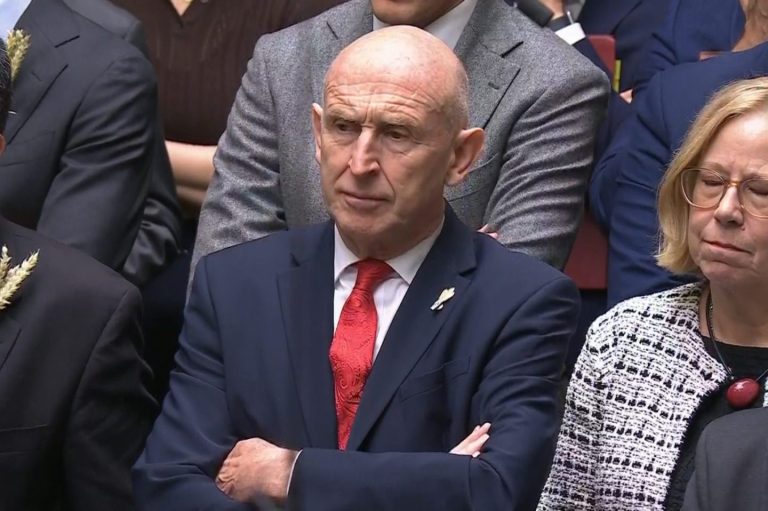
Business Secretary Jonathan Reynolds welcomed the announcement as a vote of confidence in the UK’s automotive capability, pointing to the trio of investments this week as proof that international investors and domestic firms see Britain as a place to build next‑generation vehicles. The government will be eager to leverage these stories to support broader industrial strategy aims — from securing supply chains to boosting inward investment and skills development.
Balancing wins and warning signs
While the Bentley news is positive, it sits alongside less upbeat developments in the sector. Jaguar Land Rover recently confirmed large job reductions as it seeks to cut costs and restructure for profitability amid global market pressures. That contrast highlights the uneven nature of the transition: some companies are ramping up investment and new product lines, while others are taking painful steps to reset their cost base and position themselves for a low‑carbon future.
What the Torcal signals for suppliers and skills
Risks and challenges ahead
Producing a high‑end EV at scale is complex and capital intensive. Bentley will face engineering and supply‑chain hurdles familiar to any OEM moving into electrification: battery sourcing and cost, software integration, quality control across new manufacturing processes, and the need to ensure the brand’s luxury promise survives the transition from internal combustion to electric powertrains.
Wider industrial strategy implications
From a policy perspective, such headline investments strengthen the case for sustained government support to the sector — whether through skills initiatives, targeted incentives for low‑carbon manufacturing, or procurement frameworks that encourage UK content. At the same time, policymakers must grapple with the uneven impact across the industry: while some plants grow, others shrink or restructure, meaning regional transition support and retraining programmes remain essential.
What to watch next
For now, the Torcal announcement is a clear shot of optimism for Britain’s automotive sector: a luxury marque committing to an all‑electric future, investing in its historic home and signalling that the UK can still be a hub for auto design and engineering. Whether that momentum becomes an enduring trend will depend on execution, supply‑chain resilience and the wider economic backdrop that firms must navigate as electrification accelerates.