


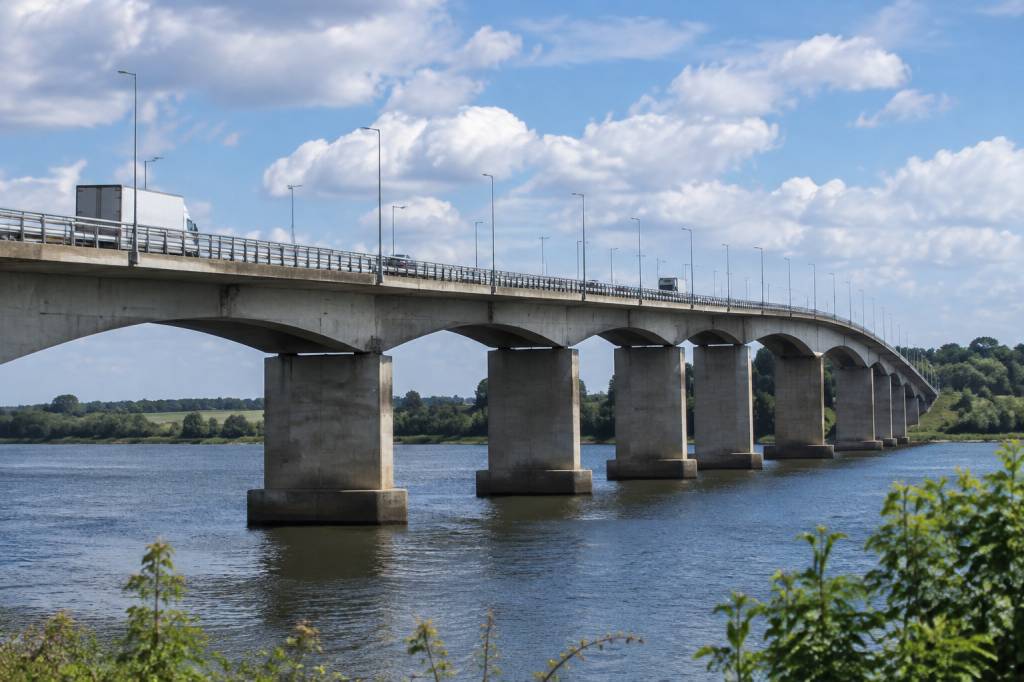
Is the Orwell Bridge closed today? The answer can change quickly, especially when strong winds or an incident affects the A14. This article does not have access to a live traffic feed, so it cannot confirm the bridge’s status at the moment you are reading it. Check the latest updates from National Highways and Suffolk’s traffic services before setting off.
The Orwell Bridge is a key part of the A14 around Ipswich, carrying traffic across the River Orwell between the east and west sides of the town. A closure can disrupt journeys well beyond the bridge itself, affecting commuters, freight traffic and drivers heading towards the Port of Felixstowe. If you are travelling today, a quick check before departure is more useful than relying on an old post or a familiar route.
How to check whether the Orwell Bridge is closed
For the most reliable picture, use official traffic information and check again if conditions are changing. Reports from social media can be useful, but they may be delayed, incomplete or already out of date by the time they reach you.
- National Highways: Check its live traffic information for incidents, road closures and restrictions on the A14. National Highways manages England’s strategic road network.
- Suffolk County Council: Consult the council’s traffic and travel information for local roadworks and disruption around Ipswich.
- Traffic England: Use the live map to view reported incidents and planned works on major roads.
- Local radio and trusted news outlets: These can provide useful updates during major disruptions, particularly when a closure causes delays across the wider area.
- Navigation apps: Apps may show slow traffic and suggest alternatives, but always follow road signs and instructions from police or traffic officers.
Look for the time attached to an update. “Closed” without a timestamp is not enough to plan a journey. A report from earlier in the morning may no longer reflect conditions, while a closure can be introduced with little warning if the weather deteriorates or an incident occurs.
Why the Orwell Bridge may close
Strong winds are one of the best-known reasons for restrictions on the bridge. Its exposed position above the river makes high-sided vehicles particularly vulnerable to gusts. Depending on conditions, authorities may introduce restrictions for certain vehicles or close the bridge to all traffic. These are different measures, so check the exact wording of the official notice rather than assuming that every warning means a complete closure.
Incidents can also affect the route. A collision, vehicle breakdown, emergency response or damaged road surface may lead to lane closures, temporary restrictions or a full shutdown. Planned maintenance and roadworks can cause disruption too, although these are generally announced in advance.
When a bridge closure is linked to severe weather, the situation may change as wind speeds rise or ease. A route that was open when you left home might be restricted later. That is why checking once in the morning is helpful, but checking again before the return journey can be just as important.
What a closure means for Ipswich traffic
The bridge is a major crossing on the A14, so a closure can quickly affect traffic across Ipswich and nearby roads. Drivers who would normally cross the river may be redirected onto signed alternative routes. Those diversions can take longer and may become busy as more traffic leaves the A14.
Disruption is not limited to people travelling from one side of Ipswich to the other. The A14 is also an important route for freight and longer-distance journeys, including traffic travelling to and from the Port of Felixstowe. When access is restricted, delays can spread along connecting roads and affect local journeys as well as commercial deliveries.
For example, someone making a routine trip across town for work may find that a diversion adds time and puts pressure on roads that are already busy. A driver travelling farther afield may encounter queues well before reaching the bridge. Neither outcome is guaranteed, but both are reasons to allow extra time and check the wider route rather than looking only at the crossing itself.
Travel advice if you are driving today
If the bridge is open, conditions may still be slow. If it is closed or restricted, the best plan is usually to follow the official diversion and allow more time than your navigation app initially suggests. Avoid making a last-minute route choice based only on a short-term traffic estimate.
- Check before you leave. Review official updates shortly before departure and note whether they describe a full closure, a vehicle restriction or congestion.
- Check again during a long journey. Use a passenger’s device or stop safely before checking. Do not handle a phone while driving.
- Follow the signed diversion. Road signs and instructions from traffic officers take priority over a route suggested by an app.
- Allow extra time. Queues may build on alternative roads, particularly at peak periods or when the disruption is unexpected.
- Keep fuel and essentials in mind. This matters most for longer trips, when an extended diversion or stationary traffic could increase journey time.
- Consider changing your travel plans. If the journey is not urgent, delaying it may be safer and less stressful than joining a developing queue.
Do not drive around barriers, enter a closed section or follow another vehicle through a restriction. Closures are imposed for safety, and conditions on a bridge can change rapidly. A few minutes saved are not worth putting yourself, other road users or emergency crews at risk.
Can you avoid the bridge?
That depends on where you are going. Some journeys can be made using other roads around Ipswich, but there is no single alternative that suits every starting point and destination. A diversion that works for a local trip may be unsuitable for a long-distance journey or a large vehicle.
Use the official signed route when the bridge is closed. If you are planning ahead, compare your route with a live map and check for restrictions on the roads you intend to use. Do not assume a smaller local road will be quicker: it may not be suitable for larger vehicles, and extra traffic can create delays for residents and emergency services.
If you are travelling by public transport, check directly with your operator. Bus routes can be affected by road closures, while rail services are not a substitute for every journey across the area. Confirm departure times and service changes rather than relying on a timetable saved earlier.
How wind restrictions differ from a full closure
It is easy to see a warning about high winds and assume that the bridge is shut. In practice, a notice may refer to a restriction affecting particular vehicle types, a reduced speed limit or a complete closure. The difference matters: some vehicles may still be permitted to cross while others are directed elsewhere.
High-sided vehicles can be more affected by crosswinds because their larger surfaces catch the wind. Drivers of vans, lorries, buses and vehicles towing trailers should pay close attention to official guidance. If a restriction applies to your vehicle, do not attempt the crossing on the assumption that conditions look manageable from the road.
Even when the bridge remains open, strong winds can make driving more demanding. Keep a firm grip on the steering wheel, leave extra space and reduce speed where appropriate. If conditions feel unsafe, find a safe place to stop and reassess the journey.
What to do if you are already on the A14
If traffic slows, stay patient and leave room for emergency vehicles. Do not stop on the hard shoulder unless it is an emergency or you are instructed to do so. If authorities close the road ahead, follow their directions and do not attempt to reverse or turn around unless directed by police or traffic officers.
Keep an eye on overhead signs and listen for local travel updates if you can do so safely. If your vehicle develops a problem, move to a safe place if possible and use the appropriate emergency procedures. In a serious emergency, contact the emergency services; do not use an emergency phone or make a call while driving in a live lane.
When traffic is moving slowly, small decisions matter. Leave a gap, avoid sudden lane changes and do not block junctions. These simple steps help keep the route safer for everyone and make it easier for emergency crews to reach an incident.
Planning around future closures
Drivers who use the bridge regularly can reduce uncertainty by checking conditions as part of their normal travel routine. Before a commute, look at the A14 and the roads around Ipswich, not just the bridge. If bad weather is forecast, allow more time and consider whether you can travel earlier, later or by another mode.
Businesses moving goods through the area may also want a contingency plan. That could include checking driver updates before dispatch, allowing flexibility in delivery windows and ensuring drivers know to follow signed diversions. A plan does not prevent disruption, but it can reduce the pressure to make unsafe decisions when conditions change.
For occasional visitors, a saved route is only a starting point. Roadworks, weather and incidents can make yesterday’s quickest route a poor choice today. Check the latest information before travelling, and use official sources to confirm whether the Orwell Bridge is open, restricted or closed.
The key point for today
The Orwell Bridge’s status is time-sensitive. Without access to live traffic data, this article cannot verify whether it is closed today or describe current queues. Check National Highways and Suffolk traffic updates immediately before travelling, read the timestamp and the details of any restriction, and follow the diversion signs if the route is closed.
A short check can save a long delay. More importantly, it helps you make a safer decision before reaching the A14.