
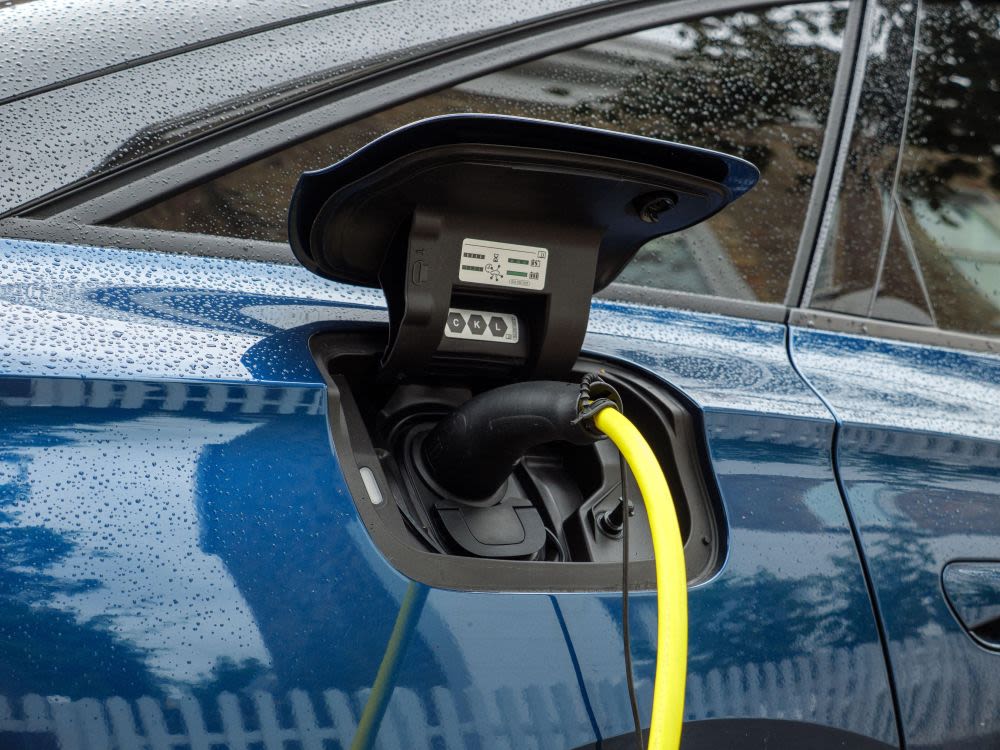
Rachel Reeves’s announcement that electric vehicle owners will face a pay‑per‑mile charge from 2028 has reopened an issue that politicians have long treated as untouchable. Road pricing — charging drivers according to which roads they use and when — is beloved by economists because it aligns costs with usage, but it has repeatedly proved a political third rail. Reeves’s move is therefore as brave as it is fraught.
Why road pricing keeps returning
The core problem is simple: the historic tax base for funding roads is eroding. Fuel duty, once a reliable source of revenue, has slipped from around 2% of GDP at the start of the century to an expected 0.8% by 2030 as cars become more efficient and more electric. Without a replacement, the sums needed to maintain and upgrade our road network will either require higher general taxation or targeted charges.
Economists like the idea of road pricing because it internalises the externalities of driving — congestion, wear and tear, pollution — and provides a price signal that encourages more efficient travel. But the politics are poisonous: any policy that blatantly appears to penalise motorists tends to provoke fierce backlash. Tony Blair retreated on road user charging two decades ago; recent London debates show the same visceral reaction remains. For Reeves to propose mileage‑based charges on EV owners is therefore a calculated political gamble, one that trades short‑term pain for longer‑term fiscal realism.
What Reeves has proposed
The details matter. Rather than a full GPS tracking system — a “spy‑in‑the‑sky” approach that would log every journey and raise significant privacy concerns — ministers have opted for a much more modest starting point. From 2028, pure electric vehicle drivers will be asked to pay 3p per mile, while plug‑in hybrids will pay 1.5p. The scheme, initially, relies on self‑reporting: drivers can estimate mileage that will then be spot‑checked during MOTs. Rates will be inflation‑linked.
That design is pragmatic. It avoids the immediate privacy row that GPS tracking would provoke and keeps administration relatively lightweight. But it also opens the door to evasion and inaccuracy. That said, officials point to other countries where basic schemes have functioned reasonably well and to the likely equity argument: EV drivers have enjoyed large subsidies and tax breaks during the transition to zero‑emission motoring, so a contribution to road costs is not unreasonable.
The politics of perception
Part of why the Chancellor has been able to press ahead is the current media and political environment. As former Department for Transport official Michael Dnes notes, even pro‑motorist outlets have warmed to the idea of levelling the fiscal playing field between electric and petrol or diesel drivers. That matters: when many of the traditional voices defending motorists are open to reform, the political cost is reduced.
Crucially, EV drivers themselves are not unanimously hostile. Many accept the logic that if you benefit from lower fuel costs and tax breaks, you should shoulder some road funding. Even so, the optics are delicate: a new charge that lands disproportionately on early EV adopters or on households that have already invested in greener cars risks being framed as a betrayal of the net‑zero transition.
Tracking versus trust
Economists and technocrats would prefer an automated, accurate system: vehicles that report miles and bill owners accordingly. Automated billing reduces error, avoids fraud and can vary charges by location and time to reflect true network costs. But the political space for any policy perceived as enforced surveillance is narrow. Governments have been burnt by debates over digital ID and are rightly cautious about anything that might rekindle privacy fears.
As a result, ministers are favouring an opt‑in model for GPS-based automation — drivers who are happy to install tracking can do so to receive accurate billing — while keeping the default self‑reporting route. That compromise buys political cover but leaves the system less efficient and more administratively awkward than it might otherwise be.
Revenue expectations and distributional concerns
The Office for Budget Responsibility expects the new mileage charge to raise roughly half the revenue currently generated by fuel duty. That still leaves a considerable gap, implying that road pricing is only one element of a broader fiscal strategy for transport funding. The government will need to think about where the remaining funds will come from and how to allocate the proceeds: maintenance, capacity upgrades, active travel, or targeted subsidies for lower‑income drivers?
Distributional fairness is central. A flat per‑mile charge is regressive if low‑income households must drive more for work or lack viable public transport alternatives. Policymakers will have to consider exemptions, rebates or targeted compensation to avoid hitting the most vulnerable. Otherwise, the scheme risks generating the very political heat it seeks to avoid.
Where this could lead
Reeves’s announcement is thus both symbolic and substantive. It signals a willingness to grapple with the fiscal realities of decarbonisation and a recognition that the old fiscal model for roads is broken. But it also exposes the fault lines between what economists know is efficient and what politicians think is acceptable.
If the policy is to succeed, ministers must accompany it with clear communication about why it’s needed, robust protections for privacy, and measures to protect those who could be unfairly burdened. Absent that, the scheme may survive as a totemic demonstration of political courage — or it may become the next battleground where public trust in modern transport policy is tested.