


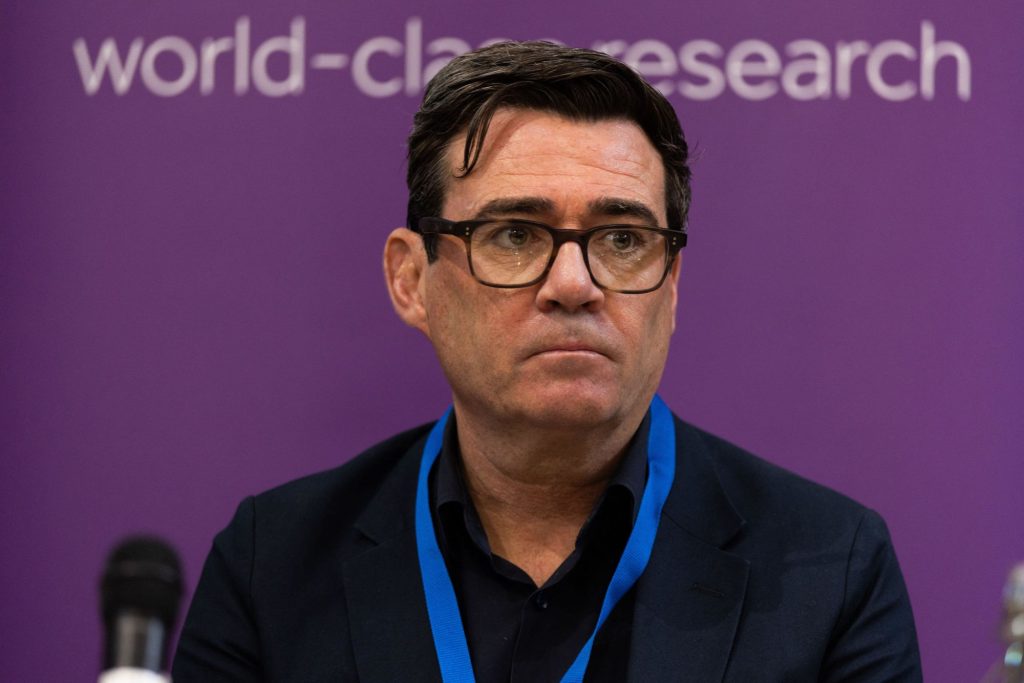
Andy Burnham’s potential return to Westminster via the soon‑to‑be vacated Gorton and Denton seat has long been the subject of intense speculation. With Andrew Gwynne’s announcement that he will stand down as Labour MP on health grounds, that speculation has predictably intensified. But according to close allies of Keir Starmer, the party leadership has already signalled that Burnham will not be allowed to stand as Labour’s candidate in the forthcoming by‑election — a move that exposes deep tensions inside the party and raises strategic questions about leadership, unity and electoral risk.
Why the leadership is said to be blocking Burnham
Several factors appear to underpin the reported decision. Burnham, the Mayor of Greater Manchester, remains one of Labour’s most high‑profile figures and, crucially, enjoys strong polling numbers among the public — in some surveys outstripping Starmer himself. For a party leader, the prospect of a potential rival re‑entering the Commons is always politically fraught. Allies of Starmer are understood to be wary of the turbulence that Burnham’s candidacy could introduce at a time when the government faces significant domestic and international challenges.
There is also the procedural reality within Labour. Any serving mayor seeking election to a parliamentary seat must secure NEC (National Executive Committee) approval; in practice, a small officers’ group of the NEC, which includes the leader, would handle such matters and could effectively block a candidate before selection even begins. PoliticsHome reports that this “clear message” has already been discreetly relayed to key party figures: Burnham will not be permitted to contest Gorton and Denton as Labour’s candidate.
Selection tactics under consideration
The sources indicate the party machine has a number of tools at its disposal. One tactical option mooted is the use of a restricted shortlist, potentially limited by gender or ethnicity — suggestions include an all‑female shortlist or an all‑BAME shortlist for Gorton and Denton. Such mechanisms are not unprecedented in Labour selections but would be highly contentious if deployed explicitly to exclude Burnham. For leadership allies, such measures would represent a blunt but effective mechanism to control the outcome of a rapid by‑election.
Backbench anger and the risk of backlash
Not all Labour MPs are comfortable with the idea of blocking Burnham. Critics argue that using the party machine to shut out a prominent figure would be divisive and could revive the factional wounds exposed by the Forde report into party culture. Baroness Lister — a member of the Forde inquiry — has publicly criticised anonymous NEC briefings and warned that the party must allow local members the opportunity to choose their candidate. Her comments reflect a broader unease among some MPs and peers about heavy‑handed centralism.
Indeed, some Labour MPs warn that attempting to block Burnham could be politically self‑defeating. One MP quoted by PoliticsHome suggested that stopping Burnham might ironically accelerate Starmer’s political difficulties rather than neutralise them: “If they block him, then ironically it’s the end for Starmer,” the MP warned. The argument is straightforward — sidelining a popular figure risks alienating both members and local voters, and could feed a narrative of top‑down control at a moment when Labour argues it is a modernising, open party.
Electoral arithmetic: the seat is not a foregone conclusion
Gorton and Denton has been a safe Labour seat historically: Labour secured it with a majority exceeding 13,000 in 2024. But the political landscape has shifted rapidly. Polling in the area suggests a much tighter contest now, with Nigel Farage’s Reform UK emerging as a genuine challenger. That dynamic raises the stakes for Labour: a by‑election defeat would be damaging symbolically and politically, but imposing a candidate from the centre could also carry costs if local members and voters see the process as undemocratic.
Local party democracy versus national strategy
At the heart of the controversy is a tension between local candidate selection and national strategy. Labour’s national executive can and does step in during by‑elections — particularly when speed is required or when the leadership judges the risk high. Yet this centralisation sits uneasily with the party’s claims to be listening to grassroots members and restoring trust after internal controversies.
For Gorton and Denton, the conventional selection process would involve a panel of three NEC members overseeing longlisting and shortlisting, with a trade union representative typically included. But in practice, the leadership’s preferences can be decisive, especially where a speedy timetable and the optics of a high‑stakes contest are involved.
What Burnham’s candidacy would mean
If Burnham were allowed to stand and chose to do so, the implications would be significant. His entry into the parliamentary ranks would immediately change the dynamics within Labour: a popular, high‑profile mayor with a strong northern base could become a rallying point for critics of the leadership or, alternatively, a powerful asset inside government. For Starmer, the calculus is difficult — Burnham’s presence could revitalise Labour’s northern appeal but might also complicate the leader’s authority and policy agenda.
Next steps and the calendar
A date for the by‑election has yet to be set; suggestions include its coinciding with the 7 May local elections. For now, the contest remains in the planning phase, and the NEC officers group — and the general secretary’s office — will play a central role in deciding how the selection proceeds. With rumours circulating and strong feelings on both sides, Labour’s handling of the situation will be watched closely by members, opponents and the media alike.
What to watch
For now, Labour faces a delicate balancing act: protecting the leader’s authority and minimising risk while avoiding the appearance of closed‑shop tactics that could alienate activists and voters. How the party navigates this moment will say a great deal about its internal culture and political instincts as it approaches the next phases of the parliamentary calendar.