


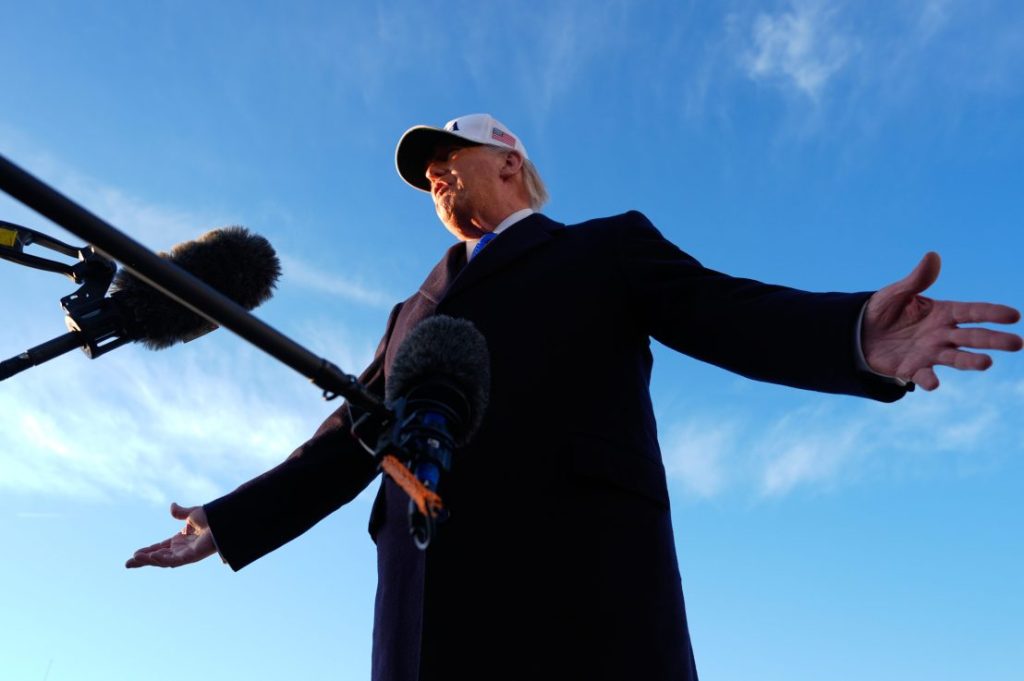
President Donald Trump’s comments and actions over the weekend sent financial markets into turbulence on Monday, leaving traders scrambling to price rapidly changing geopolitical signals. The confusion stemmed from mixed messages about potential US‑Iran negotiations and a temporary pause in strikes, which triggered violent swings in oil prices, bond yields and equity indices across the globe.
From $114 to $96 and back: oil’s wild ride
Markets opened the day with Brent crude trading around $114 a barrel amid deepening concerns about disruption to Middle East supply routes. Then came a string of posts and statements by the US president suggesting that talks with Iranian leaders had been productive and that strikes were being paused — comments that Donald Trump amplified on social media. The immediate reaction was dramatic: oil plunged as much as $18 to about $96 per barrel before settling back near the $100 mark.
The upshot was extreme intraday volatility that proved costly for risk managers and forced many market participants to step back rather than place fresh bets until the fog of conflicting statements clears.
Equity markets and bonds: relief, then reality
The FTSE 100 experienced its own rollercoaster: starting in the red, it staged a relief rally only to end the session close to where it began. Bond markets displayed sharper moves. Ten‑year gilt yields fell from around 5% to roughly 4.73% following the initial risk‑on reaction to the prospect of de‑escalation, only to climb again as uncertainty reasserted itself. Shorter‑dated gilts — a key barometer of near‑term expectations for interest‑rate policy — suggested the Bank of England might hike rates fewer times this year than previously pencilled in by some economists, albeit with continued upside risk.
That prospect presents the government with a political and fiscal headache: how to protect households from soaring energy bills without repeating the “staggeringly expensive” universal support package of 2022, while also preserving fiscal credibility and managing ballooning debt servicing costs.
Policy reaction: COBRA, energy support and political signalling
Domestically, Prime Minister Keir Starmer convened a COBRA meeting attended by Chancellor Rachel Reeves and Bank of England Governor Andrew Bailey to assess the potential economic fallout. Starmer emphasised that the UK must not succumb to “false comfort” and should plan for a protracted disruption. He reiterated that Britain will not become militarily entangled in the conflict while underscoring the need for diplomatic efforts to secure a negotiated settlement that places stringent limits on Iran’s capabilities.
The government faces a tightrope: how to deploy limited fiscal firepower to blunt the shock without exacerbating long‑term public debt pressures, especially as borrowing costs have risen.
Why markets are so sensitive now
Part of the reason for the intense reaction is structural. Years of underinvestment in oil and gas production capacity have left global supply relatively tight; that means geopolitical disruptions quickly transmit into large price moves. Moreover, the global economy remains vulnerable to higher energy costs after inflationary pressures and the slow recovery of many supply chains.
What to watch next
Markets will be focused on a handful of developments over the coming days: any concrete confirmation of talks or agreements between US and Iranian representatives; further military incidents in key energy transit routes such as the Strait of Hormuz; statements from central banks about inflation and monetary policy; and UK government decisions on energy support ahead of the price cap review.
Monday’s episode underlines a key lesson for markets in the age of social media and instantaneous presidential commentary: price discovery can now be driven just as much by the quality of communication as by the underlying fundamentals. For traders and policymakers alike, the challenge is to distinguish fleeting political theatre from substantive geopolitical shifts — and to prepare for both the economic consequences and the tricky politics of targeted assistance should the energy shock intensify.