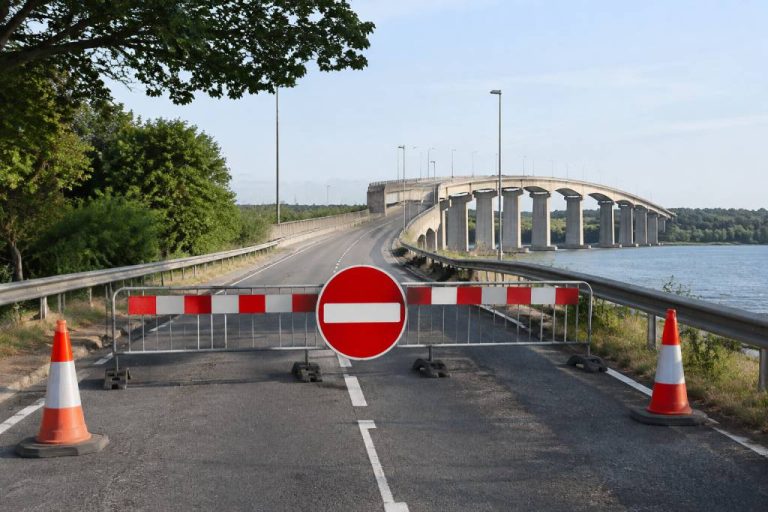
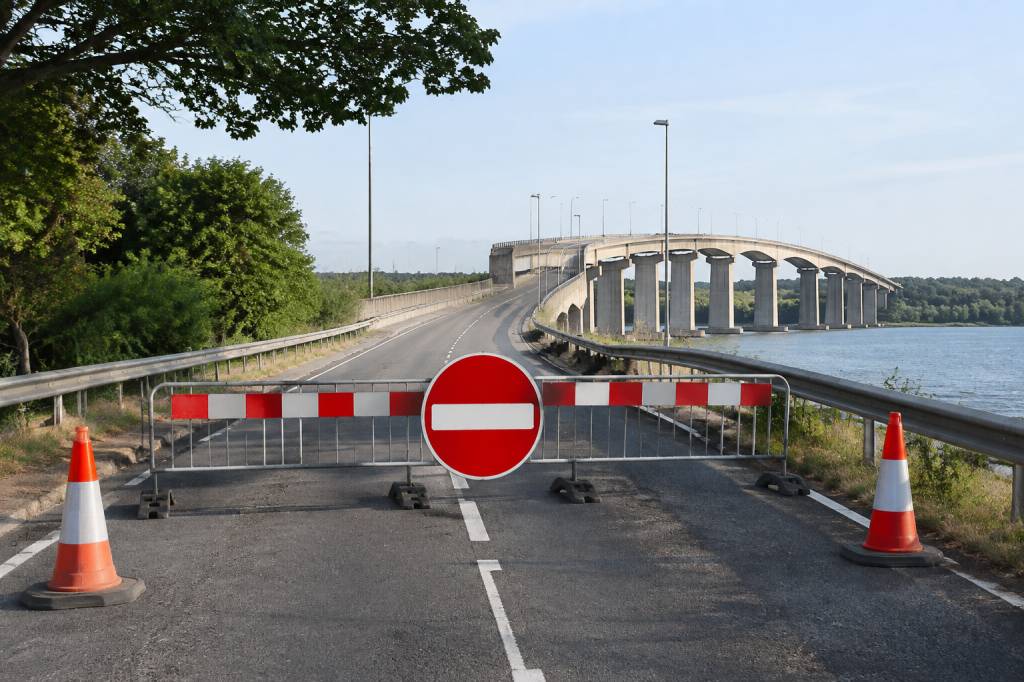
Orwell bridge closed: latest updates and diversion routes
Editor’s note: Bridge closures and diversion arrangements can change at short notice. This guide explains how to check the latest position and what drivers should expect; confirm the live status with National Highways and Suffolk Police before setting out.
Orwell Bridge: check the live position before you travel
A closure of the Orwell Bridge can quickly affect journeys across Ipswich and the wider A14 corridor. The bridge carries the A14 over the River Orwell, linking routes to the Port of Felixstowe and destinations east and west of the town. When it is shut, traffic may be diverted onto local roads that are not designed to absorb an entire motorway-scale flow without delay.
The important point is that “the Orwell Bridge is closed” does not always mean every lane is shut, nor does it necessarily mean the closure will last for a set period. Restrictions can be partial or full, and the reason may affect how long they remain in place. Check the latest traffic information rather than relying on an old social media post or a navigation app that has not yet caught up.
For current updates, consult National Highways’ traffic information service and its official social media channels. Suffolk Police and Suffolk County Council may also share information about incidents, road closures and local traffic conditions. If you are already on the road, use roadside signs and instructions from traffic officers as your primary guide.
Why the bridge may close
Strong winds are a frequent reason for restrictions on the Orwell Bridge, particularly for high-sided vehicles. The bridge is exposed, and crosswinds can make it unsafe for lorries, buses, vans carrying tall loads and other vehicles with a large surface area. Authorities may first impose restrictions on specific vehicle types, then close the bridge if conditions worsen.
Closures can also follow a collision, a vehicle breakdown, a police incident or essential inspection and maintenance work. In those situations, the response depends on what has happened. A short incident clearance may take less time than a structural inspection or a prolonged emergency response.
Wind restrictions are not simply a precaution aimed at keeping traffic moving slowly. A high-sided vehicle can become difficult to control in a strong gust, putting its driver and other road users at risk. If authorities close the bridge, attempting to bypass barriers or ignoring a restriction is not a shortcut; it is a safety risk and may be an offence.
Where to find reliable updates
Before leaving, check more than one source if the journey is time-sensitive. Official channels provide the clearest information about the closure itself, while live traffic services can help show where queues are forming and how conditions are changing.
-
National Highways: Check the official traffic information service for A14 incidents, restrictions and roadworks. Its updates are particularly relevant to the bridge because it carries the A14.
-
Suffolk Police: Look for updates when a closure follows a collision, police activity or another emergency.
-
Suffolk County Council: Check for information about local-road conditions and any council-managed closures or works that may affect a diversion.
-
Traffic and navigation apps: Use these to assess delays and compare journey times, but treat them as supporting tools. They may not reflect a new closure immediately or understand which roads are suitable for every vehicle.
-
Roadside signs: Follow official signs once you approach the area. They may direct traffic differently from a route suggested earlier by an app.
When checking a post online, look at its timestamp and source. A message saying the bridge is closed may refer to an earlier incident, while a photograph of a queue may have been taken in a different direction or at a different time. For a live journey, the most recent verified update matters more than the post with the most shares.
What to expect from diversion routes
There is no single diversion that suits every driver or every closure. The signed route can depend on the direction of travel, the location of the incident, the type of vehicle involved and the roads that remain available. Authorities may send traffic around Ipswich using the wider A14 and A12 network, with local roads forming part of a diversion where necessary.
Do not assume that a familiar route through town is the official alternative. A road that works for a car may be unsuitable for a heavy goods vehicle, and a route that looks shorter on a map may pass through residential streets, restricted turns or congested junctions. Follow the diversion signs and any instructions from police or traffic officers.
Drivers approaching from the west or north may be held back from the bridge or directed onto another part of the A14 network. Those travelling from the east, including traffic connected with Felixstowe, may encounter queues before reaching Ipswich. The exact arrangement can change as authorities respond to the incident, so check signs at each decision point rather than committing to a route based on an earlier update.
Local drivers sometimes try to avoid queues by cutting through neighbouring streets. That can make conditions worse for residents, buses and emergency services, especially when large volumes of traffic are redirected at once. Unless a diversion is marked or a local route is clearly appropriate for your vehicle, stay on the signed route.
How a closure affects journeys around Ipswich
The bridge is a key crossing of the Orwell, so a closure can affect more than traffic on the A14 itself. Queues may build at approaches and junctions, while diverted vehicles compete with normal local traffic. The impact can extend to journeys between Ipswich, the port, surrounding towns and major routes serving the east of Suffolk.
In practical terms, a short trip that normally feels routine can become unpredictable. Someone travelling to work from the east of town may face a different delay from a driver heading through Ipswich to join the A12. Even traffic that is not crossing the bridge can be affected if diverted vehicles use roads that also serve local schools, businesses or bus routes.
That is why a single estimated delay should be treated cautiously. Congestion can move as traffic is redirected, and conditions may ease in one place while worsening elsewhere. If you have an appointment, delivery or connection to make, build in extra time and check the route again shortly before departure.
Advice for lorry, bus and van drivers
Drivers of high-sided vehicles should pay particular attention to wind-related warnings. A restriction may apply to certain vehicle types before a full closure is introduced. Check the official notice for the precise rules; do not assume that a vehicle is exempt because it has travelled the route safely in similar weather before.
Heavy goods vehicle drivers should also avoid improvising a local diversion. Narrow roads, low bridges, weight limits and tight junctions can turn an attempted shortcut into a more serious problem. If the signed route is unclear or appears unsuitable, stop in a safe, legal place and seek instructions rather than continuing into an uncertain route.
Bus operators and commercial drivers should check service or dispatch updates as well as road information. A bridge closure can affect schedules, connections and delivery windows even after traffic begins moving again. Allow time for queues to clear; reopening the road does not mean the surrounding network instantly returns to normal.
Planning ahead when weather is unsettled
If strong winds are forecast, check conditions before starting a journey that depends on crossing the bridge. Drivers of cars may still be able to use it while restrictions apply to larger vehicles, but conditions can change quickly. Keep your route flexible, and consider whether the trip can be delayed until the warning has passed.
If you are travelling to Felixstowe or making a longer journey along the A14, think about where you could safely pause if the bridge closes. Do not stop on the hard shoulder or in a live lane to check your phone. Use a service area or another safe stopping place, and review information before you reach the approach.
For regular commuters, a little preparation helps. Save the official traffic information page, keep your phone charged and know how to access local travel updates. If you use a navigation app, enter your destination again after a closure is confirmed; an old route may still direct you towards the affected section.
If you are caught in a queue
Remain patient and leave enough space for traffic to move safely. Do not block junctions, bus stops or access points, and never attempt a U-turn or reverse on a major road to escape a queue. Emergency vehicles may need to get through, and sudden manoeuvres can create further collisions.
Keep an eye on official updates only when it is safe to do so. A passenger can check information, but the driver should keep their attention on the road. If you need to change your plans, tell the person expecting you that the route is disrupted rather than trying to recover lost time with risky driving.
Once the bridge reopens, expect residual delays. Traffic may take time to disperse from the approaches and diversion routes, and another incident can quickly affect the flow. Reopening is a useful update, not a guarantee of a clear run.
Key points for drivers
-
Check National Highways and other official sources for the latest confirmed status before travelling.
-
Follow signed diversions and instructions from traffic officers; do not rely on an assumed shortcut through Ipswich.
-
Check the specific rules if you drive a high-sided vehicle, especially during strong winds.
-
Allow extra time and expect disruption on connecting roads, not just at the bridge.
-
Recheck conditions before setting off and again when it is safe to do so during the journey.
The Orwell Bridge is a vital link for Ipswich and the wider region, which is why even a temporary closure can have a broad effect. The most useful response is also the simplest: verify the latest information, follow the signed route and give the traffic network time to recover. For the current status, check official updates before you travel.