Orwell bridge closure: what drivers need to know
The Orwell Bridge is one of those roads many drivers barely notice—until it closes. Carrying the A14 across the River Orwell, it is a key link for traffic moving around Ipswich and between the Midlands, East Anglia and the Port of Felixstowe. When access is restricted, delays can spread well beyond the bridge itself.
If you are planning a journey, the first question is simple: is the bridge actually closed, or are there restrictions in place? Conditions can change quickly, particularly when strong winds affect high-sided vehicles. Here is what drivers need to know, how to check for reliable updates and what to do if your route is disrupted.
Why the Orwell Bridge matters
The Orwell Bridge carries the A14 over the River Orwell on the western side of Ipswich. It is part of a major route for commuters, local journeys and freight traffic heading to and from the Port of Felixstowe. That mix of traffic means a disruption can affect far more than drivers travelling directly across the river.
When the bridge is unavailable, vehicles cannot simply continue along the same stretch of the A14. Traffic has to be managed through alternative routes, and congestion can build on nearby roads and at junctions. A journey that normally bypasses the town may be redirected closer to Ipswich, adding pressure to routes already busy with local traffic.
The bridge’s importance is also why a closure can have a wider effect on businesses and deliveries. A lorry delayed on its way to the port, for example, may be one part of a much longer supply-chain journey. For commuters, the immediate concern is more personal: whether a late start or a different route will get them to work on time.
What can trigger a closure?
Strong winds are a recurring reason for restrictions on the Orwell Bridge. High-sided vehicles, including some lorries and vans, can be more vulnerable to crosswinds on an exposed bridge. When conditions create a safety risk, authorities may restrict access for certain vehicles or close the bridge to all traffic.
That does not mean every windy day will lead to a closure. Decisions depend on the conditions at the time and the safety advice being followed. A warning of high winds is a reason to check before travelling, not proof that the bridge has already shut.
Other causes can include a road collision, a vehicle breakdown, an emergency response or planned maintenance. The scale of disruption will vary. A restriction affecting only some vehicles is not the same as a full closure, and an incident that blocks one lane may still allow traffic to pass slowly.
For that reason, headlines and social media posts can be misleading if they do not give a time, direction or clear description of the restriction. Look for the latest official update before changing your route.
Check the status before setting out
There is no benefit in joining a queue only to discover that the bridge has been closed ahead. Before you leave, check current traffic information and confirm that the update applies to your direction of travel.
-
National Highways: Check its traffic information service for A14 incidents, closures and planned roadworks.
-
Traffic signs: Follow signs on the approach roads. They may give more immediate instructions than an older online update.
-
Suffolk Police and local authorities: Their verified channels can provide updates about incidents and local traffic management.
-
Local radio: BBC Radio Suffolk and other local broadcasters may report significant disruption and changes to routes.
-
Navigation apps: Use these as a helpful guide, but do not treat them as a substitute for road signs or official closure information.
Check again shortly before travelling if the weather is worsening or an incident has just been reported. A traffic app may take time to reflect a closure, while a situation on the road can change in minutes.
What to do if the bridge is closed
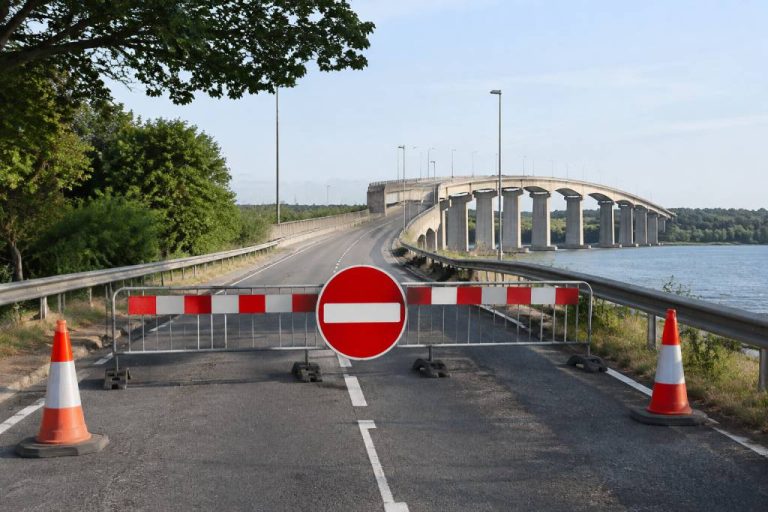
If the bridge is closed, follow the signed diversion and any instructions from traffic officers. Diversion routes are selected to manage traffic as safely as possible. They may take longer than a route suggested by a navigation app, but that does not make them optional.
Avoid creating your own shortcut through residential streets. A satnav may suggest minor roads that are unsuitable for heavy traffic or not intended to carry a large volume of diverted vehicles. Local roads can quickly become blocked, slowing buses, emergency services and people who need access to their homes.
Do not stop on the carriageway to study your phone, reverse after missing a turn or attempt to bypass a closure barrier. If you need to change your plans, find a safe place to pull over first. On a motorway or major road, stopping in a live lane or on an unsuitable shoulder can create a serious hazard.
Drivers already approaching the closure should leave extra room between vehicles and expect sudden braking. If traffic is moving slowly, keep junctions clear and do not block access for emergency vehicles. A few minutes of patience is better than turning a disruption into another incident.
Planning a journey around Ipswich
If your route depends on the bridge, build in some flexibility. Check the status before you leave, especially if you are travelling at a busy time or have an appointment that cannot be delayed. Where possible, agree on a later arrival time or identify a second route before you set off.
Drivers travelling locally may be able to postpone a non-essential trip until traffic has settled. If you are heading to work, school or an appointment, contact the destination early rather than waiting until you are already stuck. Employers and schools can often make practical adjustments when a major route is disrupted.
For long-distance journeys, consider whether you can avoid the affected section altogether. The best alternative will depend on your start point and destination, so there is no single route that suits every driver. Check the full journey rather than selecting a short detour around the bridge and assuming the rest will be clear.
Commercial drivers should also check with their employer, dispatcher or delivery contact. A revised route can affect arrival times, vehicle restrictions and delivery slots. Passing on accurate information early is more useful than relying on an estimated arrival time that has already become unrealistic.
Travelling in high winds
When strong winds are forecast, keep an eye on official updates before and during your journey. If restrictions are announced, do not attempt to cross the bridge in a vehicle that has been told not to use it. A high-sided vehicle can be particularly affected by gusts, but smaller vehicles should also be driven with care in exposed conditions.
Reduce speed when conditions require it, keep both hands on the steering wheel and leave more space around your vehicle. Be alert to sudden gusts, especially when passing gaps in roadside protection or emerging from sheltered areas. If you are towing, carrying a roof box or driving a vehicle with a large side profile, take the forecast seriously and consider whether the journey can wait.
Weather forecasts describe the expected conditions over an area; they do not tell you whether the bridge is open at this exact moment. Use the forecast to plan ahead and the latest traffic information to make the final decision.
Why traffic can remain slow after reopening
A reopening does not instantly restore normal traffic. Vehicles may be queued on approaches to the bridge, and it takes time for those queues to clear. Traffic may also remain heavy on diversion routes after the original closure has ended.
Some drivers will still be following an alternative route, while others may be returning to the A14 at the same time. Junctions and local roads can therefore stay busy after the bridge itself is moving again. A green traffic marker on a map does not necessarily mean a free-flowing journey.
Before setting off, look for an update confirming both that the restriction has ended and that traffic is moving. If an official notice says the bridge has reopened, allow for residual delays rather than assuming your usual journey time has returned.
Common mistakes to avoid
-
Relying on an old post: A screenshot or message shared earlier may no longer reflect current conditions.
-
Confusing a restriction with a full closure: Check which vehicles and directions are affected.
-
Following an unofficial shortcut: Stick to signed diversions and road instructions.
-
Using a phone while driving: Check updates before leaving or after parking somewhere safe.
-
Assuming reopening means clear roads: Queues can take time to disperse.
The practical takeaway for drivers
The Orwell Bridge is a vital A14 crossing, so a closure can affect journeys across and around Ipswich. Strong winds, collisions, breakdowns and roadworks may all lead to restrictions, but the details—and the affected traffic—can differ from one incident to the next.
Check National Highways and other verified local updates before you travel. Follow signs and traffic officers, allow extra time and avoid improvised diversions through residential streets. If conditions are poor, ask whether the journey can wait. The few minutes spent checking the latest information may save much longer in a queue—and help keep the roads safer for everyone.